 Save
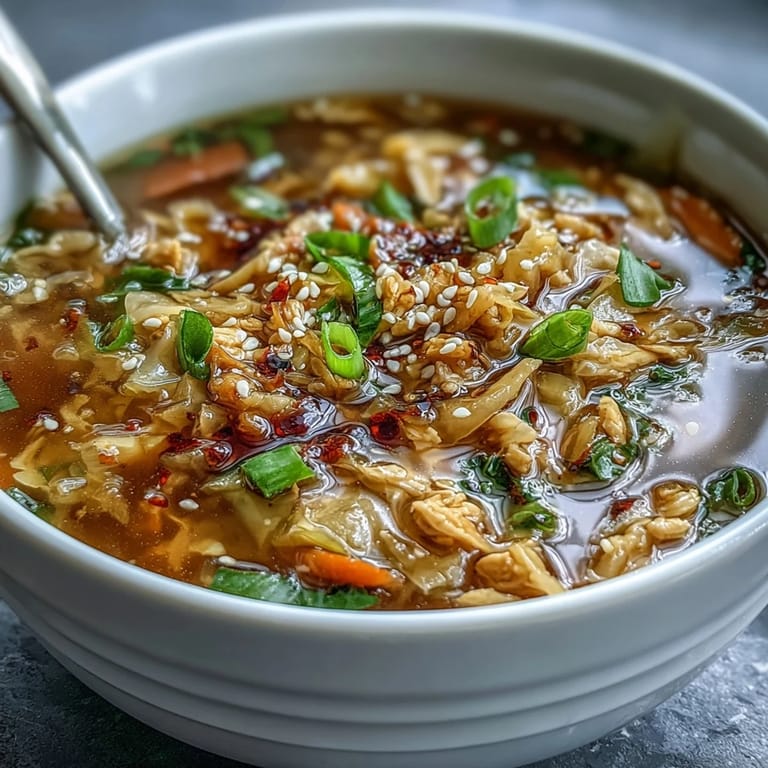
Save One Tuesday night, my kitchen smelled like a dumpling house—ginger, garlic, and toasted sesame oil hanging in the air—but I was standing there with leftover rotisserie chicken and a craving for something warm that didn't feel like starting from scratch. That's when egg roll soup found me, or maybe I found it in that moment between hunger and exhaustion. It's all the comfort of crispy egg rolls without the frying, without the mess, just pure savory broth and tender vegetables that taste like a hug in a bowl.
I made this for my neighbor who'd been under the weather, and watching her face light up when she tasted it—that moment when food becomes more than just fuel—reminded me why I love cooking in the first place. She called me the next day just to ask if I'd use more chili crisp next time, and honestly, that's the highest compliment I could get.
Ingredients
- Ground chicken (1 lb): Use the fattier ground chicken if you can find it—the rendered fat is where the flavor lives, and it seasons the whole pot naturally without feeling heavy.
- Onion, garlic, and ginger: These three are your flavor foundation; don't skip mincing the garlic fine or grating the ginger fresh, the texture matters.
- Green cabbage (4 cups, thinly sliced): Slice it thin enough that it cooks down and gets tender but not so thin it disappears into mush.
- Carrots (2 medium, julienned): The thin cut lets them soften quickly while staying a little snappy, and they catch your eye in the bowl.
- Green onions: Split them—half goes into the broth to build flavor, half stays raw on top for brightness and bite.
- Chicken broth (6 cups): Low-sodium matters here because you're adding soy sauce and you want to control the salt yourself.
- Soy sauce, rice vinegar, sesame oil: These three balance each other—umami, acid, and richness—so don't eyeball them, measure properly.
- Chili crisp (2–3 tbsp): This is the grand finale, the thing that makes people ask for your recipe, so choose one you actually love eating straight from the jar.
Tired of Takeout? 🥡
Get 10 meals you can make faster than delivery arrives. Seriously.
One email. No spam. Unsubscribe anytime.
Instructions
- Brown the chicken first:
- Heat your pot over medium heat and add the ground chicken, breaking it apart as it cooks until there's no pink left and the edges are just starting to caramelize, about 5 to 6 minutes. You want it cooked through but not gray and sad, so listen for the sizzle and watch for color.
- Build your flavor base:
- Toss in the chopped onion, minced garlic, and grated ginger, stirring constantly until your kitchen smells like a restaurant and the onion turns translucent, roughly 2 to 3 minutes. Don't walk away during this part—this is where the magic starts.
- Add vegetables and soften them:
- Stir in the sliced cabbage and julienned carrots, cooking and stirring occasionally until they start to soften and lose their raw edge, about 4 to 5 minutes. The cabbage will wilt down dramatically and that's exactly what you want.
- Pour in broth and seasonings:
- Add your chicken broth, soy sauce, rice vinegar, sesame oil, and black pepper all at once, then bring everything to a gentle boil before dropping the heat down to a simmer. Let it bubble away uncovered for 10 to 12 minutes so the flavors actually get to know each other instead of staying strangers.
- Finish with green onions and taste:
- Stir in most of the reserved green onions and taste the broth—if it needs more salt, add soy sauce; if it needs more zing, add a splash more vinegar. This is your moment to make it exactly how you like it.
- Serve with the toppings:
- Ladle the soup into bowls and top each one generously with chili crisp, the remaining raw green onions, and sesame seeds if you're feeling fancy. The raw toppings stay on top, not stirred in, so you get that contrast of textures in every bite.
 Save
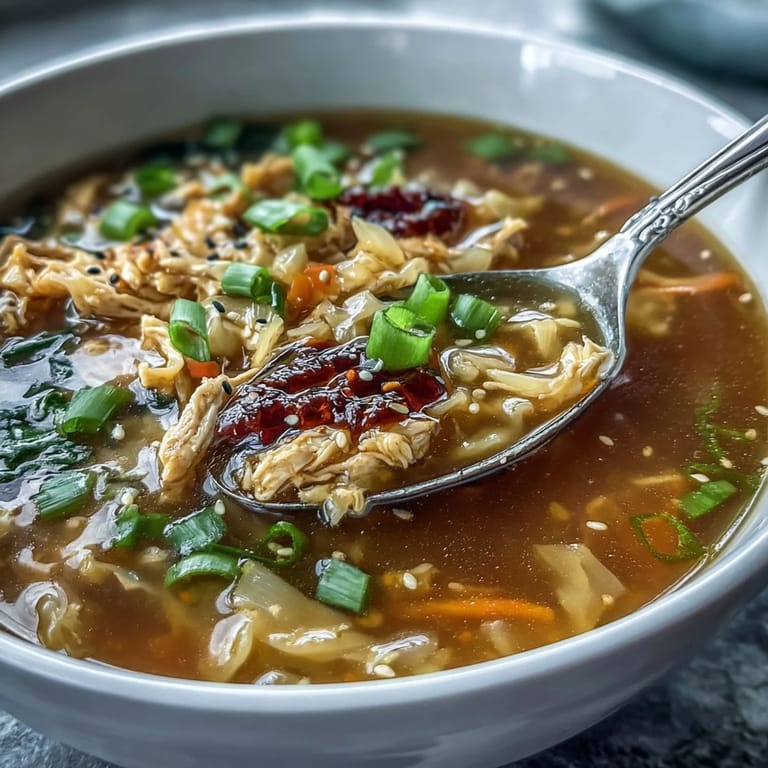
Save My kid actually ate vegetables in this soup without negotiating, without picking them out, and that alone makes this recipe legendary in our house. There's something about the broth that makes even the cabbage taste like something she actually wants to eat.
Why This Tastes Like Takeout but Costs Less
The secret is that you're not just boiling ingredients together—you're layering flavors by browning the chicken first, building an aromatic base with the onion-garlic-ginger trio, and letting everything simmer long enough for those flavors to actually meld. That's what restaurant cooking is, really, just patience and technique that anyone can do at home.
Swaps and Substitutions That Work
If you don't have ground chicken, use shredded rotisserie chicken, ground turkey, or even ground pork for a slightly richer broth. For vegetarian versions, crumbled tofu or tempeh absorb the flavors beautifully, and vegetable broth works just fine in place of chicken broth.
How to Make This Suit Your Kitchen
This soup is forgiving in the best way—add mushrooms or bamboo shoots if you want more texture, throw in some bok choy in the last few minutes if you have it, or skip the sesame seeds if you're not a fan. The structure stays solid no matter what you adjust.
- Prefer it brothier? Add another cup of broth and simmer a little longer for the flavors to adjust.
- Want it spicier? Add fresh chili slices to the broth while it simmers, or just use more chili crisp at the end.
- Make it ahead and reheat gently—the flavors actually get better the next day, just don't boil it hard or the vegetables will turn to mush.
 Save
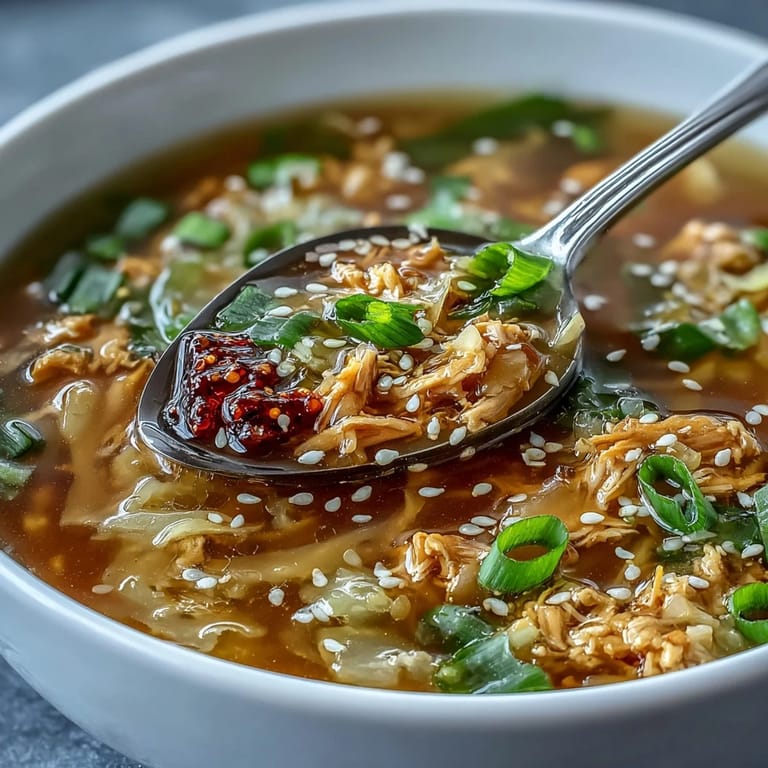
Save This soup has become my go-to when I want something that feels homemade and special but doesn't ask too much of my evening. That's the recipe I keep coming back to, the one that actually gets made instead of just daydreamed about.
Recipe FAQs
- → Can I make this vegetarian?
Yes, substitute ground chicken with crumbled firm tofu or tempeh and swap chicken broth for vegetable broth. The cooking time remains the same.
- → What can I use instead of chili crisp?
Try sriracha, sambal oelek, or crushed red pepper flakes mixed with a little oil. For a homemade version, crisp up garlic and shallots in oil with dried chilies.
- → How long does this soup keep?
Store in an airtight container for 3-4 days. The broth will continue to absorb flavors. Add chili crisp fresh when reheating to maintain texture.
- → Can I freeze this soup?
Yes, freeze for up to 3 months. The vegetables may soften slightly after thawing, but flavor remains excellent. Reheat gently on the stovetop.
- → What vegetables work well in this?
Beyond cabbage and carrots, try bok choy, sliced mushrooms, bamboo shoots, bell peppers, or bean sprouts. Add hearty vegetables earlier in cooking.
- → How can I make this spicier?
Increase chili crisp amount, add sliced fresh chilies during sautéing, or stir in sriracha with the broth. Adjust heat level to your preference.