 Save
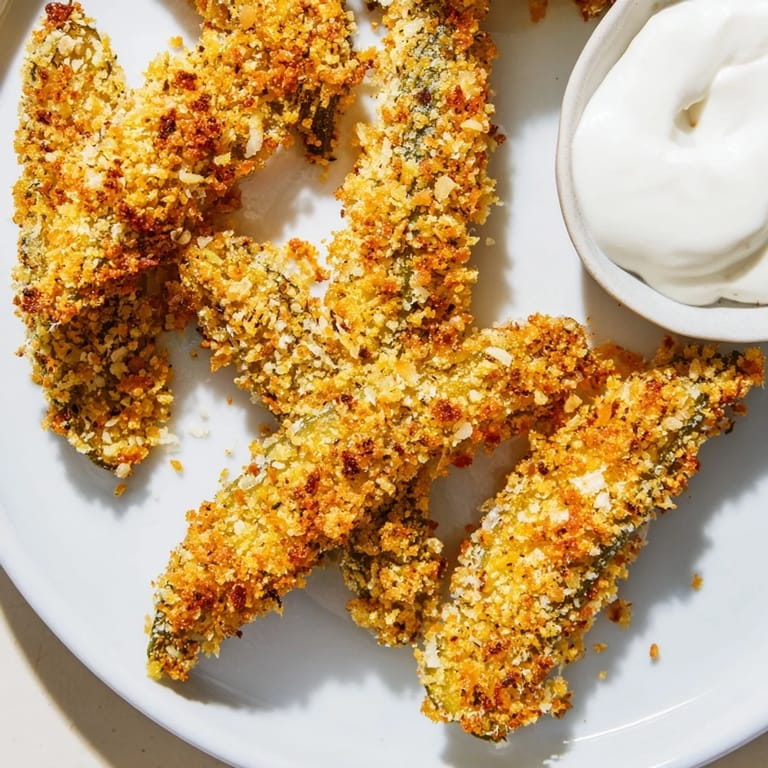
Save My best friend showed up at a summer barbecue with a container of fried pickles, and I watched people abandon their burgers mid-bite to reach for them. There was something magnetic about that golden, crispy exterior giving way to a cold, tangy bite that made everyone pause and say the same thing: where did these come from? That night, I realized I'd been missing out on one of the easiest, most crowd-pleasing appetizers that tastes like someone spent hours perfecting it when really it only takes about twenty minutes. Now they show up at my parties too, and honestly, they disappear faster than anything else I make.
I made these for a game night where someone's cousin came in saying she "doesn't eat much" and then quietly ate half the batch while watching football. Her quiet nod of approval meant more than any elaborate compliment—it was the look of someone discovering something they didn't know they needed.
Ingredients
- Dill pickle spears: Make sure they're truly dry; any excess liquid will splatter in the oil and ruin the crunch you're after.
- All-purpose flour: This first layer is the glue that holds everything together—don't skip it even though it seems redundant.
- Eggs and milk: Whisk them together until they're completely smooth; this is your adhesive layer that makes the breadcrumbs stick like they mean it.
- Panko breadcrumbs: They're grainier than regular breadcrumbs and give you that audible crunch when you bite through.
- Garlic powder and paprika: These aren't optional flavor additions—they're what make people say "there's something special about these."
- Cayenne pepper: Start with less than you think; heat builds in fried foods and sneaks up on you.
- Vegetable oil: Use something with a high smoke point that won't impart its own flavor—peanut oil works beautifully too.
- Ranch dressing: The cool counterpoint that makes the whole thing feel balanced and intentional.
Tired of Takeout? 🥡
Get 10 meals you can make faster than delivery arrives. Seriously.
One email. No spam. Unsubscribe anytime.
Instructions
- Heat your oil to exactly 350°F:
- Use a thermometer and trust it—too cold and they'll get greasy instead of crispy; too hot and the outside burns before the inside gets anything. Let the oil reach temperature while you set up your breading station.
- Set up your breading assembly line:
- Shallow bowls for each stage make this feel organized instead of chaotic. Once you start, you'll be moving quickly, so having everything within arm's reach matters more than you'd think.
- Bread each pickle with intention:
- Flour first so nothing slides off, egg wash next to seal everything in place, then breadcrumbs pressed on gently so they actually adhere instead of falling into the oil. The pressing matters—don't rush it.
- Fry in small batches:
- Crowding the pan drops the temperature and creates steam instead of that beautiful golden color. Listen for the sizzle—when the oil sounds angry and impatient, you're about two minutes from perfectly crispy.
- Drain them the moment they're golden:
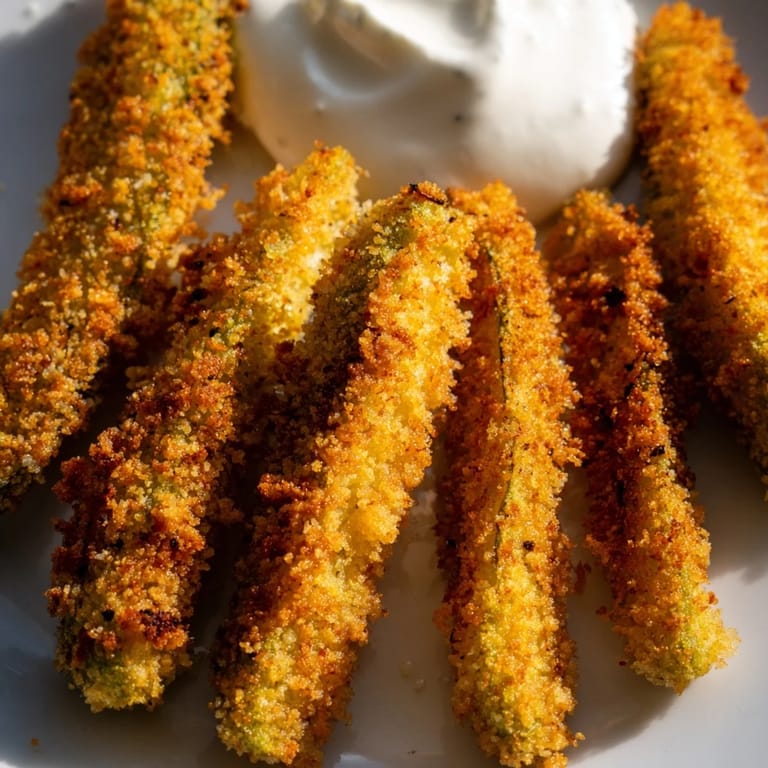
- Paper towels are your friend; a few minutes sitting there and they'll stay crispy rather than getting soggy. Serve them while they're still warm enough that steam rises off them.
 Save
Save There was a moment at a potluck when someone's five-year-old asked for "just one more" and then sat quietly eating them with both hands, completely happy. That's when I understood these aren't fancy—they're pure, simple joy on a plate.
The Oil Temperature Matters More Than You Think
I spent years frying things and wondering why they sometimes came out greasy, and it always traced back to oil that was too cool. At 350°F, the exterior seals immediately, trapping the moisture inside and creating that crispy shell. Drop the temperature ten degrees and you're basically poaching them in oil instead of frying—they'll absorb everything and taste heavy. Get a good instant-read thermometer and use it; it's not being fussy, it's the difference between something you'll want to eat again and something you'll politely leave on the plate.
Why Panko Changes Everything
Regular breadcrumbs are fine, but panko breadcrumbs have this coarser texture that creates actual cracks and crevices when they fry. Those little air pockets toast up instead of compacting, and that's where your crunch comes from. It's a small difference in ingredients that creates a surprisingly big difference in texture—the kind of detail that makes people stop mid-chew and ask what you did differently.
Dressing and Serving Ideas
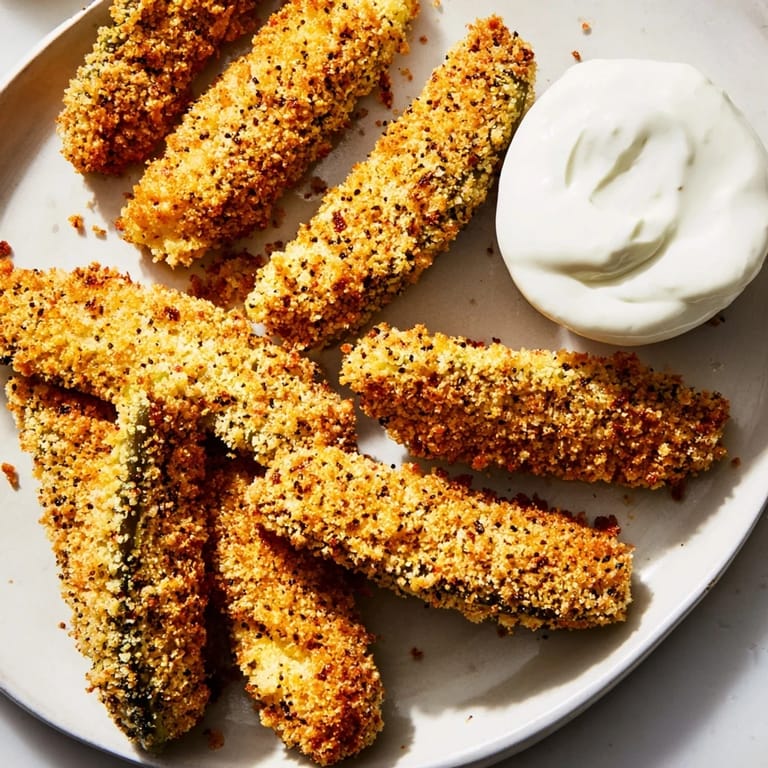
Ranch dressing is the classic pairing, but I've watched people's faces light up when they discover these with spicy ranch, blue cheese, or even sriracha mayo. The cool dressing does something essential—it cuts through the richness and makes you want another one immediately.
- Make a quick spicy ranch by stirring cayenne into your dip.
- Serve them while they're still warm enough to steam slightly, right out of the oil.
- Have extra napkins nearby—they're worth getting your hands a little messy.
 Save
Save These pickles prove that sometimes the best appetizers are the ones that don't try too hard. Make them when you want people to feel taken care of without spending your whole evening in the kitchen.
Recipe FAQs
- → What type of pickles work best?
Large dill pickle spears with firm texture hold up well during frying, providing the best crunch and tang.
- → How to achieve extra crispy coating?
Using panko breadcrumbs and ensuring the oil is hot enough (350°F) helps create a crispier, golden crust.
- → Can I bake instead of deep-fry?
Baking is possible but may yield a less crispy texture; spraying the coated pickles with oil can help mimic frying results.
- → How long do fried pickles stay crisp?
They are best enjoyed immediately. If kept warm, placing them on a rack helps maintain crispness by preventing sogginess.
- → What dips pair well besides ranch?
Spicy ranch, blue cheese, or a tangy aioli complement the flavor and add variety to the dipping experience.