 Save
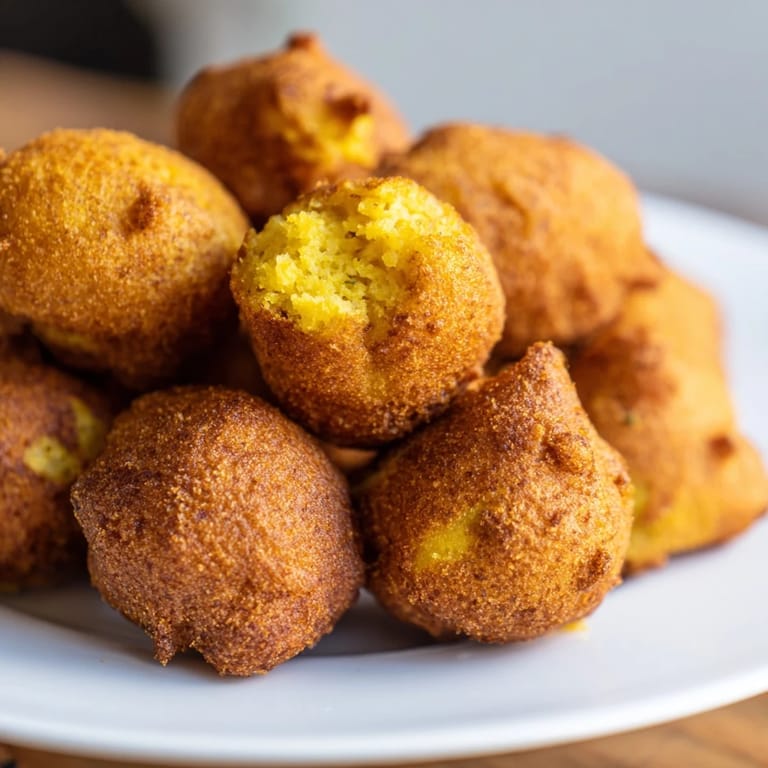
Save My uncle's dock house smelled like old wood and frying oil the first time I watched him make hushpuppies. He'd call them his "fishing trip secret," though really they were just an excuse to fry something golden while the coolers sat waiting on the boat. The batter came together in minutes, and before I could ask questions, he was dropping spoonfuls into bubbling oil with the ease of someone who'd done it a thousand times. I've made them countless times since, chasing that same easy confidence he had.
I made these for my sister's backyard dinner party on a humid July evening when everyone was too hot to care much about anything. But the moment a platter of warm hushpuppies came out, shoulders relaxed and people actually stayed at the table. Someone dipped one in honey butter and made a noise I'll never forget. That's when I realized hushpuppies aren't just a side—they're an excuse for people to sit a little longer together.
Ingredients
- Yellow cornmeal (1 cup, medium grind): This is the star—it gives you that signature grainy texture and mild corn flavor. Don't skip the medium grind; fine cornmeal makes them dense, coarse makes them gritty.
- All-purpose flour (½ cup): Just enough to give structure without making them heavy or cakey.
- Baking powder and baking soda (1½ tsp and ½ tsp): These create that crucial lift and crispy exterior the moment they hit hot oil.
- Buttermilk (¾ cup): The tang is essential—it reacts with the soda and adds real flavor depth. If you don't have it, make your own with milk and lemon juice.
- One large egg: Just enough binding without making the batter dense or eggy-tasting.
- Diced onion (½ cup): Sweet or yellow onions dissolve into the batter and add a subtle savory note that makes people wonder what the secret ingredient is.
- Vegetable oil (1.5–2 liters): You need enough depth for the hushpuppies to float freely and fry evenly on all sides.
Tired of Takeout? 🥡
Get 10 meals you can make faster than delivery arrives. Seriously.
One email. No spam. Unsubscribe anytime.
Instructions
- Mix the dry goods:
- In a large bowl, whisk together cornmeal, flour, baking powder, baking soda, sugar, salt, black pepper, and cayenne if you're using it. The whisk breaks up any lumps and distributes the leavening evenly so every bite has the same lift.
- Combine the wet base:
- In another bowl, whisk buttermilk and egg until they're fully incorporated and the color is uniform. This step takes 30 seconds and matters more than people think.
- Bring it together gently:
- Pour the wet mixture into the dry ingredients and stir just until the flour disappears—you want a few tiny lumps remaining. Overmixing develops gluten and makes them tough and dense. Stop stirring the moment you can't see dry flour anymore.
- Add texture and flavor:
- Fold in the diced onion and chives if you're using them. This gentle motion preserves the airiness you just created. Let the batter sit for 5 minutes while you prepare the oil; this resting time lets the cornmeal fully hydrate.
- Heat the oil properly:
- Pour oil into a deep fryer or heavy-bottomed pot and bring it to exactly 350°F. Use a thermometer—this temperature is not negotiable. Too hot and they brown before cooking through; too cool and they absorb oil and become greasy.
- Fry in batches:
- Using two small spoons or an ice cream scoop, carefully drop heaping spoonfuls of batter into the oil. Don't crowd the pan; they need room to float and cook evenly. Fry only 4 to 6 at a time so the temperature stays steady.
- Watch for the turn:
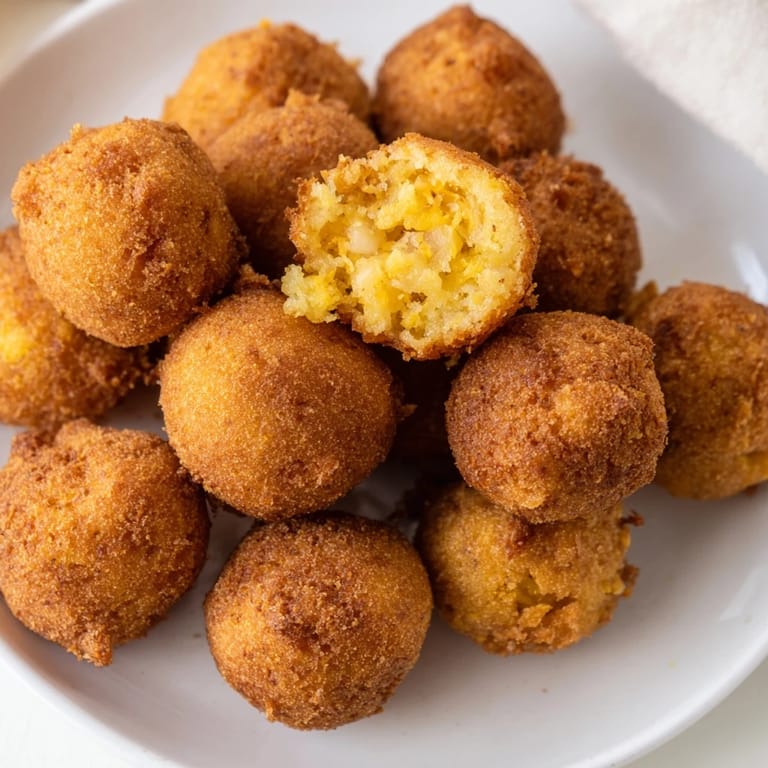
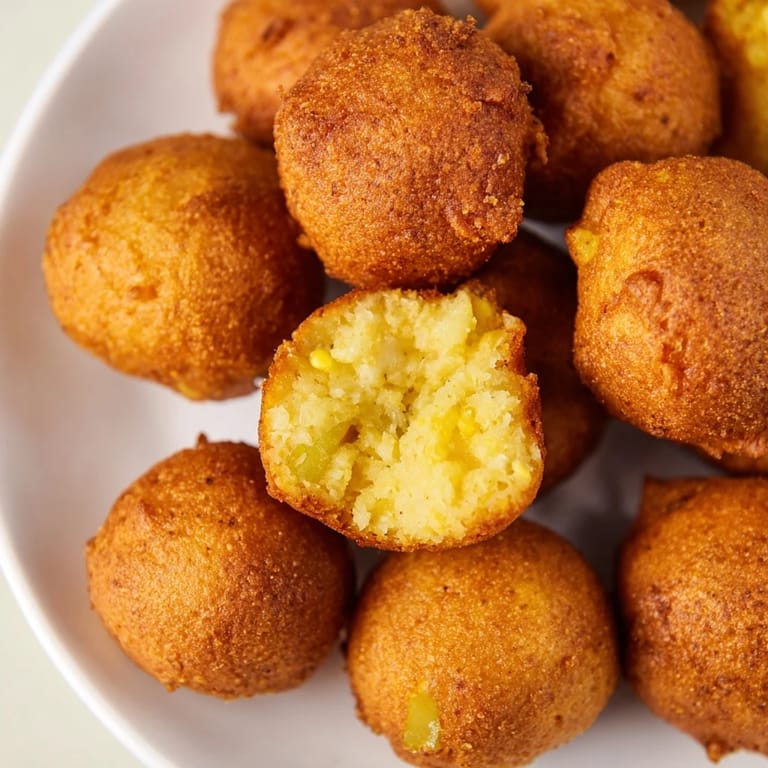
- After about a minute, the hushpuppies will float to the surface. Turn them gently with a slotted spoon so the other side browns evenly. They're done when the whole sphere is deep golden and sounds hollow when tapped.
- Drain and serve hot:
- Lift them out with a slotted spoon and place them on paper towels to drain. The residual heat keeps them crispy while the oil drips away. Eat them within minutes of frying while they're still warm and the outside snaps when you bite it.
 Save
Save I learned the hard way that hushpuppies are one of those rare dishes that taste better when you're not overthinking them. My second batch, the ones I fussed over and stirred carefully, came out dense and oily. The careless batch, dropped quickly into perfect oil by someone who'd had two beers, was absolutely perfect.
The Right Oil Matters
Vegetable oil, canola oil, or peanut oil all work beautifully because they have high smoke points and neutral flavors that let the cornmeal shine. Some people swear by peanut oil for the subtle richness it adds. Whatever you choose, make sure it's fresh—old oil that's been reused tastes rancid and ruins everything. I keep a dedicated bottle just for frying hushpuppies because they deserve better than yesterday's oil.
Flavor Variations Worth Trying
The base recipe is perfect on its own, but sometimes the mood calls for something different. A pinch of smoked paprika adds a whisper of depth without announcing itself. Fresh jalapeño minced fine brings real heat that builds on your tongue. Some nights I add a tablespoon of honey to the batter for a barely perceptible sweetness that makes the savory notes pop.
Serving and Storage
Serve hushpuppies hot alongside fried fish, or honestly, just serve them on their own because nobody will complain. They're good with tartar sauce, honey butter, or even a simple hot sauce for dipping. Leftover hushpuppies can be reheated in a 350°F oven for about 8 minutes until they crisp back up, though I've never actually had leftovers.
- Eat them the same day they're fried; they lose their magic after sitting in the fridge.
- If you need to make them ahead, fry them early and reheat gently in the oven just before serving.
- Store extras in an airtight container at room temperature, but know they'll be softer and won't taste quite as good as fresh.
 Save
Save Hushpuppies remind me that some of the best foods are the simplest ones, made better by the people you're sharing them with. There's something about warm cornmeal fried golden that brings everyone back to the table.
Recipe FAQs
- → What type of cornmeal is best?
Medium grind yellow cornmeal provides the best texture and flavor, balancing crispiness with a tender interior.
- → Can I prepare the batter ahead of time?
It's best to fry the batter within 30 minutes to maintain optimal texture, as resting helps but overwaiting may affect crispness.
- → How hot should the oil be for frying?
Maintain oil temperature around 350°F (175°C) to achieve a golden exterior and fully cooked interior without greasy results.
- → What are good serving suggestions?
Serve warm alongside fried fish, tartar sauce, or honey butter to enhance the savory and crispy qualities.
- → Can I add spice to the dough balls?
Yes, a pinch of cayenne pepper or smoked paprika enhances the flavor with a mild heat that complements the cornmeal.