 Save
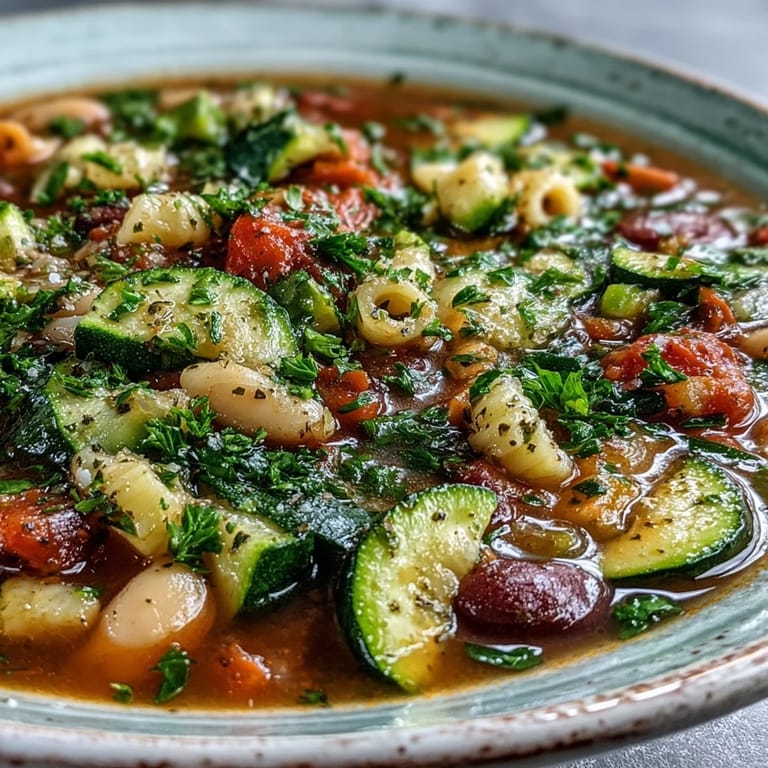
Save The steam from a big pot of minestrone always makes me think of my tiny apartment kitchen where the windows would fog up in November. It was not about the perfect recipe then, just whatever looked good at the market and needed to be used. I found that the rhythm of chopping carrots and celery became a way to decompress after a long day. This soup is less of a rigid formula and more of a warm hug in a bowl. You can really feel the kitchen come alive when the herbs hit the hot broth.
One rainy Tuesday, I accidentally added twice the amount of garlic because the cloves were massive, and the result was life changing. Everyone who came over that evening commented on the incredible aroma drifting into the hallway before they even knocked. We ended up sitting on the floor with mismatched bowls, passing around a loaf of crusty bread. That night proved that a humble soup could be the center of the best conversations. It is the kind of meal that feels like it has a soul.
Ingredients
- Olive oil: Use a good quality extra virgin oil to saute the base vegetables for a richer flavor profile.
- Large onion: Dicing this finely ensures it melts into the broth and provides a sweet foundation.
- Celery stalks: These add a necessary salty crunch that balances the sweetness of the carrots.
- Medium carrots: Carrots provide a natural sweetness and a vibrant pop of color to the pot.
- Garlic cloves: Freshly minced garlic is nonnegotiable for that punchy aromatic hit in every spoonful.
- Medium zucchini: Keep the dice slightly larger so they do not turn to mush during the simmering process.
- Green beans: These provide a lovely snap and a fresh green taste to the hearty base.
- Baby spinach or kale: Adding these at the very end keeps them bright and prevents overcooking.
- Diced tomatoes: Canned tomatoes with their juice provide the essential acidic backbone for the soup.
- Vegetable broth: A low sodium broth lets you control the final seasoning perfectly.
- Tomato paste: Sautéing this for a minute before adding liquid creates a deep caramelized depth.
- Small pasta: Ditalini or elbows are the classic choice because they fit perfectly onto a soup spoon.
- Cannellini or kidney beans: These beans offer a creamy texture and plenty of plant based protein.
- Dried oregano: This herb brings a classic earthy Italian vibe that ties everything together.
- Dried basil: Basil adds a subtle sweetness that complements the tomatoes beautifully.
- Dried thyme: A little goes a long way in providing a woody and sophisticated undertone.
- Bay leaf: This humble leaf works behind the scenes to add a complex savory layer.
- Fresh parsley: Stirring this in at the finish wakes up all the other flavors with brightness.
Tired of Takeout? 🥡
Get 10 meals you can make faster than delivery arrives. Seriously.
One email. No spam. Unsubscribe anytime.
Instructions
- Sauté the aromatics:
- Start by heating oil and letting the onion, celery, and carrots soften until the kitchen smells incredible. Watch for the onions to turn translucent and sweet.
- Incorporate the greens:
- Toss in the garlic, zucchini, and green beans to let them catch some of that golden heat. This short sear helps the vegetables keep their structure.
- Build the base:
- Stir in the tomatoes, paste, broth, and all those dried herbs to create the flavorful liquid foundation. Make sure the tomato paste is fully dissolved into the broth.
- Simmer the soul:
- Let everything bubble gently together so the vegetables can share their secrets with the broth. Keep the heat low to avoid boiling away too much liquid.
- Add heartiness:
- Drop in the pasta and beans, cooking just until the noodles have a slight bite left. Remember that the pasta continues to cook even after you turn off the stove.
- The final wilt:
- Fold in the leafy greens and parsley, watching them turn a vivid green in the hot soup. This only takes a minute or two of gentle stirring.
- Final seasoning:
- Pull out the bay leaf and add salt and pepper until the flavors truly sing to you. Ladle the soup into wide bowls while it is still steaming hot.
 Save
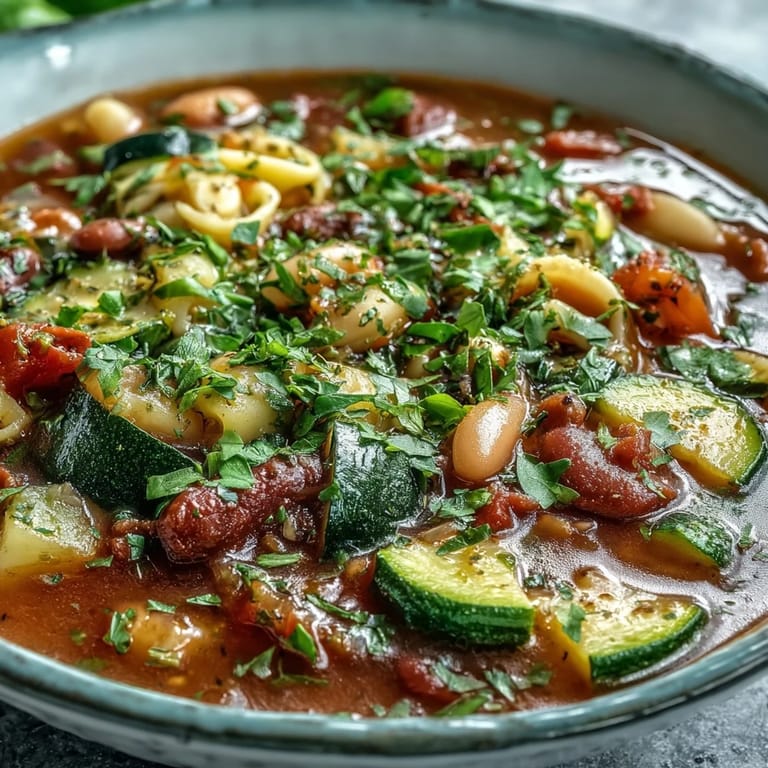
Save I once served this to a friend who claimed they hated zucchini, yet they asked for a third helping. They did not even notice the green bits because they were so busy enjoying the savory herb infused broth. It made me realize that some vegetables just need the right environment to shine. Now, whenever I see a pile of zucchini at the store, I smile and think of that empty bowl.
Finding Your Rhythm
Take your time with the initial vegetable dice because uniform pieces mean everything cooks at the same rate. I find that lining up my bowls of prepped veggies makes the actual cooking process feel like a calm dance. There is no rush when the kitchen smells this good.
Seasonal Swaps
This pot is incredibly forgiving, so feel free to swap in butternut squash for carrots during the colder autumn months. I have even used frozen peas in a pinch when the produce drawer was looking a bit bare. The soup adapts to your life and your pantry.
The Perfect Garnish
A heavy dusting of Parmesan cheese is usually my go to, but a swirl of pesto can also transform the dish. It provides a concentrated burst of basil and garlic that elevates the humble soup to restaurant quality. Try these small additions to make it your own.
- Add a squeeze of lemon juice at the end for a hit of acidity.
- Toast some thick sourdough bread to soak up every last drop of the broth.
- Drizzle a tiny bit of high quality olive oil over each bowl before serving.
 Save
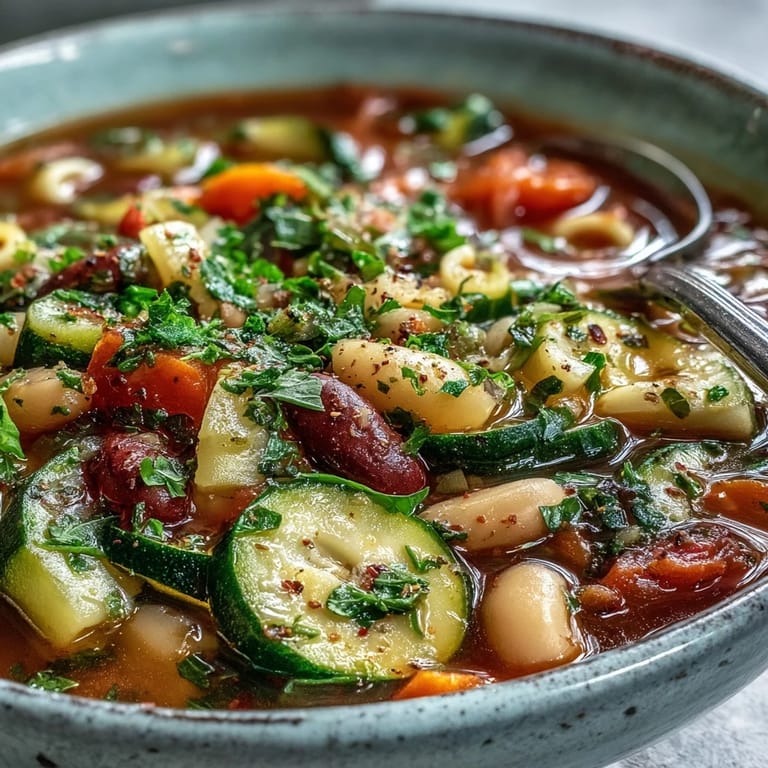
Save This soup is more than a meal, it is a reminder that the simplest ingredients can create something truly special. I hope every spoonful brings a little bit of warmth and comfort to your table tonight.
Recipe FAQs
- → What vegetables work best in minestrone?
Classic vegetables include onions, celery, carrots, zucchini, and green beans. You can also add seasonal vegetables like diced potatoes, bell peppers, or Swiss chard based on what's available.
- → How do I prevent the pasta from becoming mushy?
Cook the pasta directly in the broth during the final 10 minutes of simmering. This allows it to absorb flavor while maintaining al dente texture. If making ahead, cook pasta separately and add when reheating.
- → Can I make this gluten-free?
Absolutely. Simply substitute regular pasta with gluten-free alternatives like rice-based penne, chickpea pasta, or quinoa elbows. Always verify your vegetable broth and other ingredients are certified gluten-free.
- → How long does this keep in the refrigerator?
Stored in an airtight container, it keeps well for 4-5 days. The flavors continue to develop over time, often tasting even better on the second or third day.
- → What type of beans should I use?
Cannellini beans are traditional, offering a creamy texture and mild flavor. Kidney beans, great Northern beans, or borlotti beans also work beautifully. Rinse and drain canned beans before adding.
- → Can I freeze this for later?
Yes, freeze for up to 3 months. For best results, slightly undercook the pasta or omit it entirely, then add freshly cooked pasta when reheating to prevent it from becoming too soft.