 Save
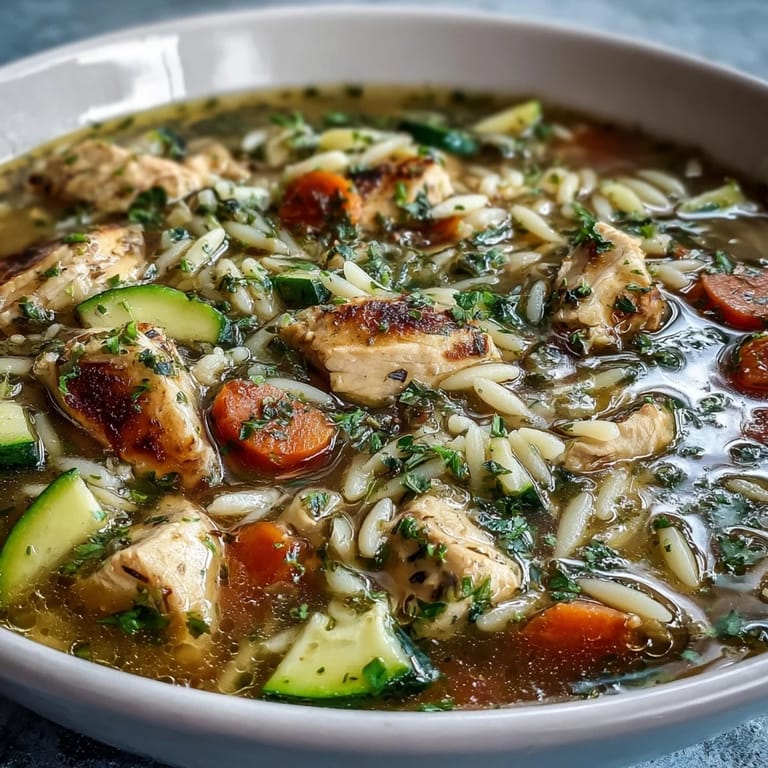
Save There's something almost magical about the moment a simple pot of broth transforms into something that smells like pure comfort. I discovered this lemon chicken and zucchini orzo soup on a Tuesday when I was standing in my kitchen with three ingredients and absolutely no plan, just the vague memory of wanting something bright and warm at the same time. The lemon does the heavy lifting—it cuts through the richness and makes the whole thing sing like it's been simmering for hours, even though you'll have it ready in less than 45 minutes. It's become my go-to when I want to feel nourished without fussing, or when friends drop by and I want to prove I actually know how to cook.
I made this for my sister when she came home exhausted from a terrible shift at work, and watching her take that first spoonful—the way her shoulders actually dropped—reminded me why I love cooking for people. She asked for seconds before she'd finished the first bowl, and that's when I knew this recipe belonged in regular rotation.
Ingredients
- Boneless, skinless chicken breasts (2, about 400 g), diced: Buying them fresh and cutting them yourself lets you control the size—smaller pieces cook faster and distribute better through the soup.
- Medium zucchini, diced: Don't peel it; the skin holds the delicate flesh together during cooking and adds a subtle earthiness.
- Medium carrot, peeled and diced: The natural sweetness balances the lemon's brightness beautifully.
- Small yellow onion, finely chopped: Yellow onions are sweeter than white, which matters when you're building flavor in a light broth.
- Garlic (2 cloves), minced: Mince it just before adding to the pot so it releases its full fragrance into the oil.
- Celery (2 stalks), diced: This is your secret umami player; don't skip it even if you think you don't like celery.
- Lemon juice and zest (from 1 large lemon): Always zest before you juice—it's easier, and that zest is where the real lemon personality lives.
- Fresh parsley (2 tablespoons), chopped, plus extra for garnish: Fresh herbs added at the end taste completely different from cooked ones; save some for finishing.
- Orzo pasta (3/4 cup, 120 g): Orzo cooks quickly and absorbs the broth's flavor without getting mushy if you watch it closely.
- Low-sodium chicken broth (6 cups, 1.5 L): Low-sodium lets the lemon and herbs shine instead of fighting saltiness.
- Olive oil (2 tablespoons): Good olive oil matters here since it's not cooked long enough to mellow out.
- Dried oregano (1 teaspoon) and dried thyme (1/2 teaspoon): These Mediterranean herbs feel natural with lemon and chicken, creating warmth without heaviness.
- Salt and freshly ground black pepper, to taste: Taste as you go; you'll need less salt than you think because the broth already carries some.
Tired of Takeout? 🥡
Get 10 meals you can make faster than delivery arrives. Seriously.
One email. No spam. Unsubscribe anytime.
Instructions
- Start with the holy trinity:
- Heat the olive oil in your large pot over medium heat, then add the onion, carrot, and celery. Let them soften for 4 to 5 minutes, stirring occasionally so they don't stick. You'll know it's working when the kitchen smells sweet and the vegetables start turning translucent at the edges.
- Wake up the garlic:
- Stir in the minced garlic and cook for exactly 1 minute—long enough for it to become fragrant but not so long it burns. If it starts browning, it's too late; you'll taste bitterness instead of that mellow, sweet garlic flavor.
- Sear the chicken:
- Add your diced chicken to the pot and sprinkle it with salt, pepper, oregano, and thyme. Stir constantly for 3 to 4 minutes until the outside of each piece turns opaque and pale. You're not trying to brown it heavily; you just want it sealed so it stays tender.
- Build the soup base:
- Pour in the chicken broth and let it come to a gentle boil—you'll see small bubbles breaking the surface, not an aggressive rolling boil. This temperature keeps everything from getting tough.
- Cook the pasta and vegetables:
- Add the orzo and zucchini, then reduce the heat to a simmer and cook for 10 to 12 minutes, stirring occasionally. The orzo will soften and drink in the broth, while the zucchini stays just tender with a slight bite. Taste an orzo piece—when it's no longer chalky but still has resistance, you're done.
- Finish with brightness:
- Stir in the lemon juice, zest, and half the fresh parsley. Taste it now and adjust the seasoning—if it feels flat, add more salt gradually; if it feels too lemony, add a bit more broth. The soup should taste balanced, with no single flavor dominating.
- Serve and celebrate:
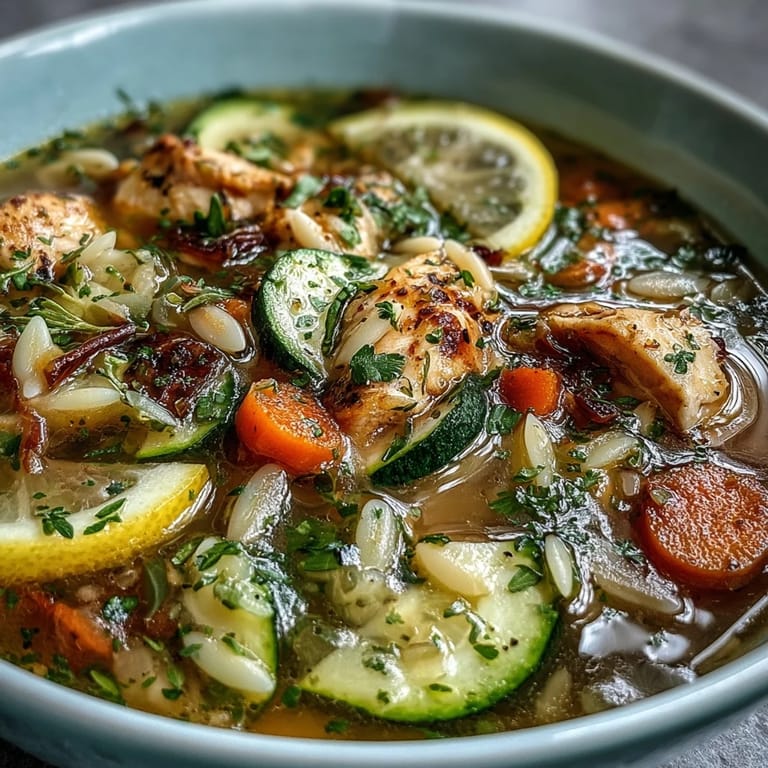
- Ladle it into bowls while it's hot, garnish with the remaining parsley and maybe a thin lemon slice if you're feeling fancy. The aroma alone is worth the effort.
 Save
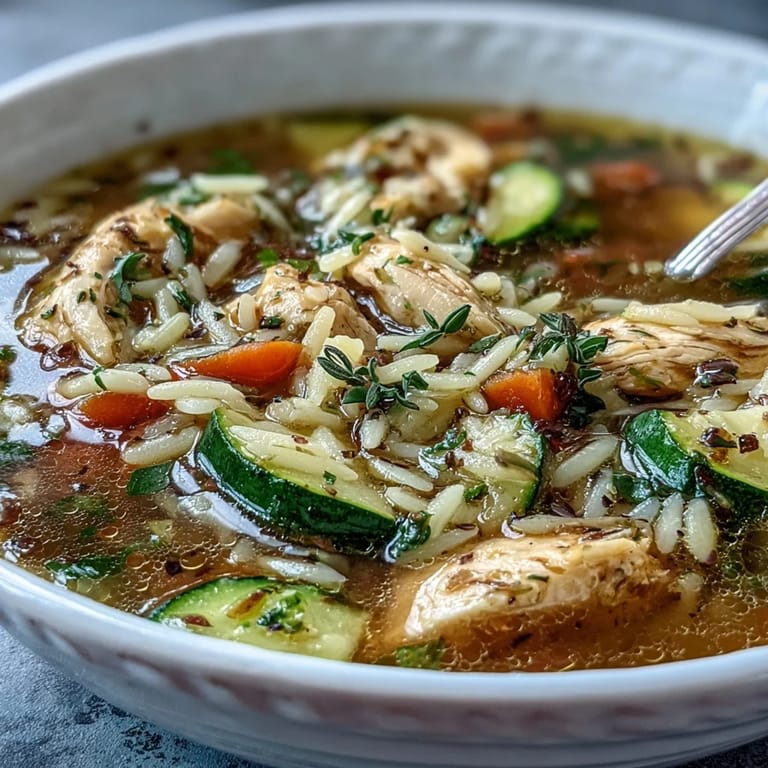
Save The best part of this soup isn't just how it tastes—it's watching someone's face relax when they taste something that's nourishing without being heavy. There's real healing in a bowl that's lemony and fresh but still feels like a warm hug.
How to Make It Your Own
This recipe is honestly a canvas. I've made it with spinach instead of zucchini on mornings when I had greens that needed using, and it was equally lovely—just add the spinach at the very end so it stays vibrant and doesn't turn dark. Someone once suggested adding white beans for extra heartiness, and it worked beautifully. The lemon and herbs are what make this soup feel like itself, so keep those constant, but everything else can shift with what's in your kitchen or what you're craving.
Storage and Reheating
This soup keeps in the refrigerator for about 3 days in an airtight container, and honestly, it tastes even better the next day when the flavors have had time to mingle. When you reheat it, go low and slow on the stovetop so the orzo doesn't turn to mush. The lemon flavor fades slightly with time, so if you're eating it after a day or two, add a tiny squeeze of fresh lemon juice before serving.
Timing and Flexibility
The beauty of a one-pot soup is that you can actually start it 15 minutes before you need dinner and still have time to set the table and pour a glass of wine. If you're really pressed for time, use rotisserie chicken—just shred it and add it with the broth instead of cooking raw chicken; your timing drops to about 25 minutes total. If you want to make it vegetarian, swap the chicken for chickpeas and use vegetable broth, and it becomes an entirely different dish that's equally satisfying.
- Pro tip: prep your vegetables while the broth heats so you're ready to go the moment the oil shimmers.
- If your orzo looks like it's absorbing liquid too fast, add a splash more broth—pasta should float, not sink into a thick stew.
- Lemon zest doesn't keep well in soup over time, so if you're making this ahead, zest and juice the lemon fresh right before serving.
 Save
Save This soup has become my answer to so many moments—when I'm tired and need something nurturing, when friends need feeding, when the weather is cold but I don't want anything heavy. Make it once and you'll understand why it's the kind of recipe that travels with you.
Recipe FAQs
- → Can I use other types of pasta instead of orzo?
Yes, small-shaped pastas like acini di pepe or couscous can be good substitutes. Adjust cooking time accordingly to maintain texture.
- → How do I know when the chicken is fully cooked?
The diced chicken is done when it turns opaque throughout and reaches an internal temperature of 165°F (75°C).
- → Can I make this dish dairy-free?
Absolutely. The base is naturally dairy-free. Avoid adding cream or yogurt to keep it suitable for dairy-free diets.
- → What herbs complement the flavors best?
Oregano and thyme provide earthiness, while fresh parsley adds a bright, herbal note that accentuates the lemon.
- → Is it possible to prepare this ahead of time?
You can prepare it a day in advance and reheat gently. Add fresh parsley and lemon zest just before serving to maintain freshness.
- → Can I substitute chicken with a vegetarian protein?
Yes, chickpeas work well as a plant-based protein alternative while maintaining a similar hearty texture.