 Save
Save There's something almost meditative about assembling spring rolls on a lazy Sunday afternoon, especially when the kitchen smells like fresh herbs and lime. I discovered these while trying to recreate a meal from a tiny restaurant tucked into a Bangkok side street, where an older woman with flour-dusted hands showed me how the rice paper transforms from brittle to silky in seconds. What started as an attempt to impress my sister turned into our go-to when we want something that feels fancy but comes together faster than ordering takeout. The beauty of them is how forgiving they are, how every roll is slightly different depending on your mood and what's in the fridge.
I made these for my coworkers during a potluck and watched them disappear in minutes, which caught me completely off guard since I'd brought them as a casual side dish. One person came back asking if I could teach her how to fold them properly, and we spent ten minutes laughing at my attempts to explain the technique without sounding like I was giving assembly line instructions. That small moment made me realize these rolls do something special—they make people slow down and actually taste their food instead of just consuming it.
Ingredients
- Rice paper wrappers: These delicate sheets are the soul of the roll—buy them from the Asian section if possible, as they soften more evenly than cheaper alternatives.
- Cooked chicken breast, shredded: Poach or roast it gently so it stays tender; oversalting at this stage changes everything.
- Carrots, julienned: Cut them into thin matchsticks so they stay bright and don't overpower the more delicate flavors.
- Cucumber, julienned: This adds the cooling element that makes spring rolls feel so refreshing on your palate.
- Red bell pepper, thinly sliced: The color matters here, both for your plate and because it adds a subtle sweetness that balances the herbs.
- Lettuce leaves, torn: Use something crisp like butter lettuce or romaine; iceberg will wilt too quickly and lose its appeal.
- Fresh mint leaves: This is non-negotiable—mint is what transforms these from nice to memorable.
- Fresh cilantro leaves: Don't skip this, even if it's not your favorite herb; it rounds out the flavor in ways you won't notice until it's gone.
- Green onions, sliced thin: They add a whisper of sharpness that keeps everything from tasting too gentle.
- Creamy peanut butter: Use something with minimal additives; the quality of the sauce depends on this ingredient more than any other.
- Soy sauce: Tamari works beautifully if you're avoiding gluten, and honestly tastes cleaner.
- Fresh lime juice: Bottled will do in a pinch, but fresh lime brings a brightness that actually makes people notice the sauce.
- Honey or maple syrup: The sweetness cuts the saltiness and creates balance; I usually reach for honey because it dissolves instantly.
- Sesame oil: Just a teaspoon is enough to add that toasted, nutty depth that rounds everything out.
- Warm water: This loosens the sauce to the perfect consistency for dipping without making it taste watered down.
- Garlic, minced: Fresh garlic in the sauce makes it taste alive rather than flat.
- Fresh ginger, grated: Don't be shy with this; the warmth it adds is what makes people ask for your recipe.
- Sriracha or chili sauce: Optional, but heat brings all the flavors into sharper focus.
Tired of Takeout? 🥡
Get 10 meals you can make faster than delivery arrives. Seriously.
One email. No spam. Unsubscribe anytime.
Instructions
- Set yourself up for success:
- Arrange all your vegetables and herbs on a platter before you touch a single rice paper wrapper. This isn't just organized—it changes everything because you'll be folding quickly and you won't want to be hunting for cilantro halfway through. Having everything prepped lets you move with a rhythm instead of frantically searching your cutting board.
- Wake up the rice paper:
- Fill a shallow dish with warm water and slip one wrapper in for about 10 to 15 seconds—you're looking for that moment when it goes from stiff to silky but not so long that it becomes fragile. Lay it flat on a damp kitchen towel, and here's the thing nobody tells you: if it still feels slightly firm, that's actually perfect because it'll continue softening as you work.
- Build your foundation:
- Lay a small handful of lettuce along the bottom third of the wrapper, then arrange your chicken and vegetables in a neat line on top of it. The lettuce acts as a barrier that keeps the wrapper from getting soggy and gives you a base to build on, so don't skip this step even though it feels redundant.
- Layer with intention:
- Scatter your herbs—mint and cilantro—generously across the vegetables, then top with sliced green onion. These herbs are what people taste first, so don't be timid with them; this is where the roll gets its personality.
- The fold that matters:
- Fold the bottom edge of the wrapper up and over the filling, tuck it under slightly, then fold in the two sides toward the center before rolling the whole thing up tightly like a burrito. Roll firmly but not so hard that you tear the wrapper, and the whole motion should feel like one fluid motion rather than multiple separate steps.
- Create the sauce:
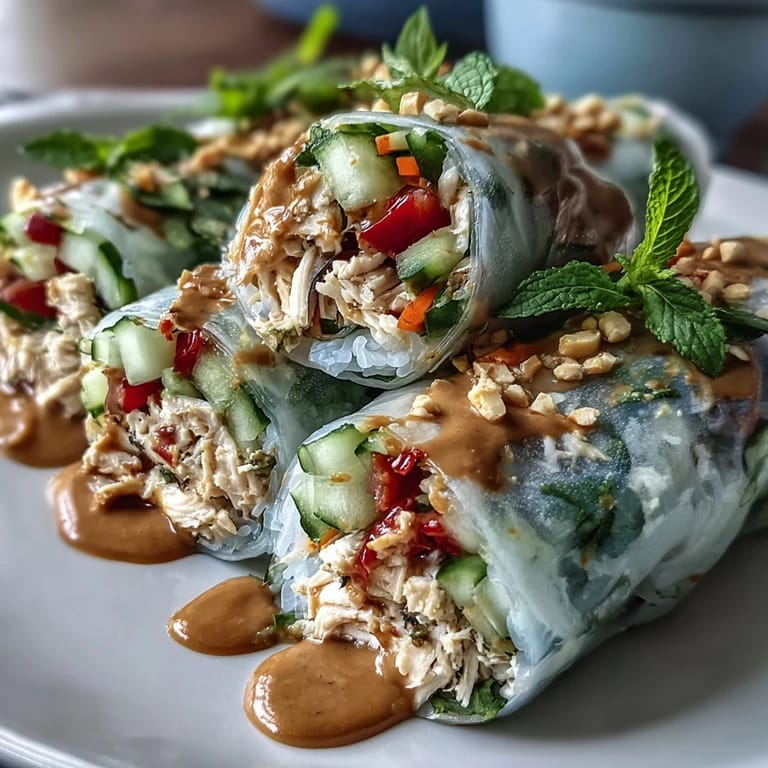
- In a bowl, whisk peanut butter with soy sauce, lime juice, honey, sesame oil, and warm water, then add your minced garlic and grated ginger. The key is whisking vigorously until it's completely smooth—any lumps of peanut butter will make the sauce feel gritty instead of creamy. Taste it and adjust water for consistency; it should be thick enough to cling to a spring roll but thin enough to pour.
- Present and serve:
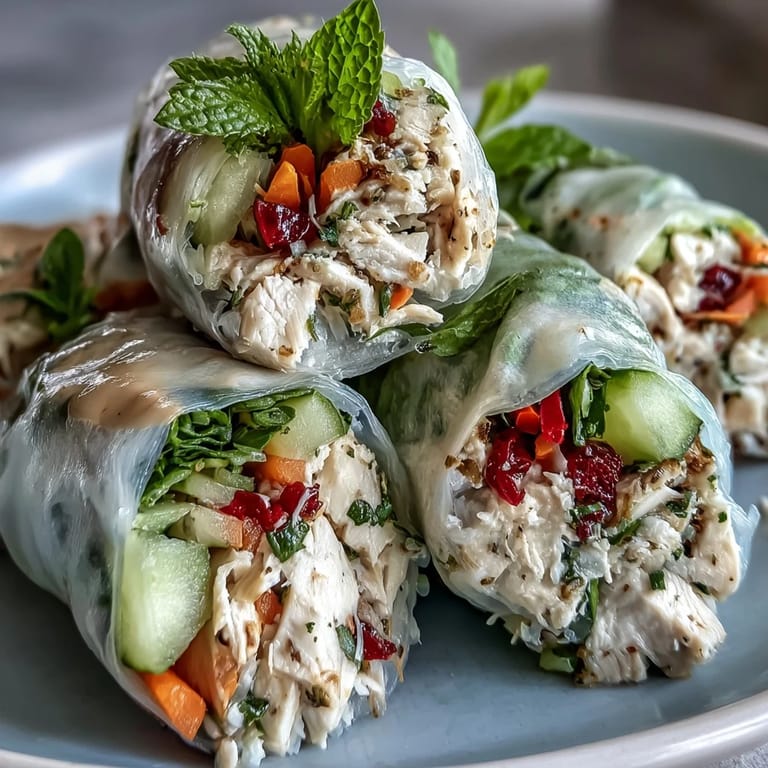
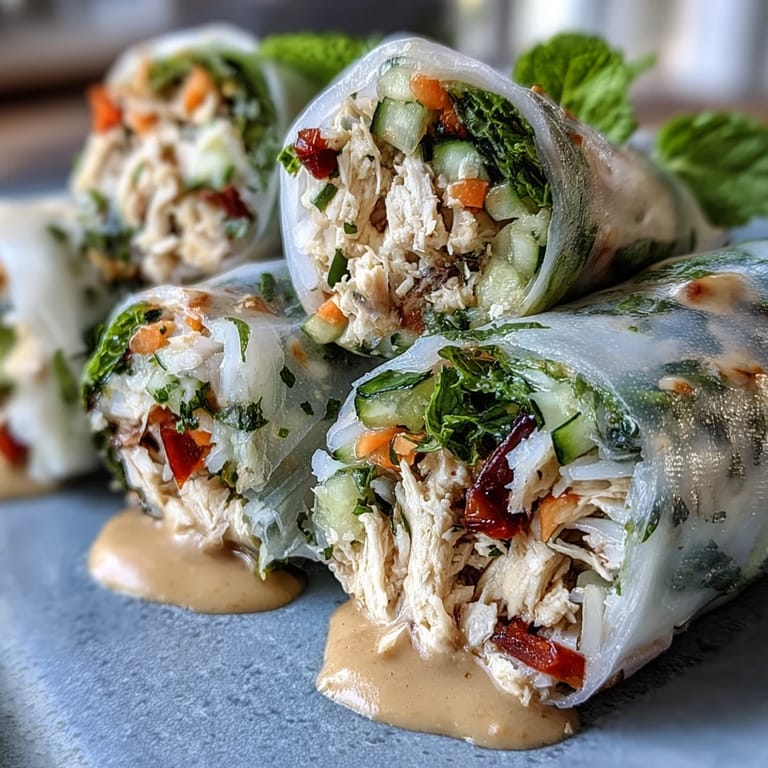
- You can serve these whole or slice them in half on a bias, which looks more elegant and lets people see the colorful layers inside. Arrange them on a plate with the peanut sauce in a small bowl alongside, and serve immediately while everything is still crisp and alive.
 Save
Save My grandmother once told me that you can taste when something is made with patience, and I finally understood what she meant while eating these spring rolls on a quiet evening. The combination of textures and the way each bite tastes slightly different depending on which herb hit your palate first made me realize this isn't just an appetizer—it's almost a small meditation on freshness and intention.
Why Spring Rolls Feel Like Self-Care
There's something about the ritual of assembling these that slows you down in a world that's always moving too fast. The act of softening rice paper, arranging vegetables with care, and folding each one becomes almost therapeutic, especially if you're having a week where everything feels chaotic. I've learned that making these when I'm stressed is as much about the process as the outcome—your hands slow down, your breathing steadies, and suddenly you're fully present in your kitchen instead of somewhere else entirely.
The Peanut Sauce Secret
The peanut sauce is genuinely the difference between a nice spring roll and one people ask about for weeks. I used to make it with cold water and wonder why it tasted flat, then someone mentioned using warm water and suddenly everything changed—the flavors bloomed in a way they never did before. The warmth helps the peanut butter dissolve evenly, and the garlic and ginger release their oils more fully, creating something that tastes complex without being complicated.
Making Them Your Own
These spring rolls are a canvas more than a fixed recipe, which is why they work so well whether you're cooking for yourself or feeding a crowd with different preferences. I've made versions with shrimp instead of chicken, added vermicelli noodles for people who wanted something heartier, and once substituted crispy tofu for a vegetarian friend who's now obsessed with them. The structure stays the same, but the story changes depending on what you put inside and who you're making them for.
- If you're meal-prepping, assemble them the morning of and keep them between damp paper towels in the fridge, but eat them within a few hours because the wrapper will gradually firm up.
- Make extra peanut sauce because people always want more, and it keeps in the fridge for almost a week.
- If your wrapper tears while you're rolling, just grab another one—everyone makes mistakes, and wasting a wrapper is better than serving something that feels broken.
 Save
Save These spring rolls have become my answer to the question of what to make when you want something that tastes special but doesn't require hours in the kitchen. They're proof that simple can be beautiful, and that the most memorable meals are sometimes the ones that just taste like care.
Recipe FAQs
- → How do I keep the rice paper from sticking together?
Dip each rice paper wrapper in warm water just until pliable, then lay it flat on a damp towel before filling to prevent sticking.
- → Can I prepare these rolls in advance?
It's best to assemble the rolls shortly before serving to maintain the rice paper’s softness and crisp vegetable texture.
- → What can I substitute for chicken to make this vegetarian?
Firm tofu or marinated tempeh work great to replace chicken while maintaining protein presence.
- → How can I adjust the peanut sauce for less sweetness?
Reduce honey or maple syrup slightly and balance with extra lime juice or soy sauce to maintain flavor depth.
- → Is it necessary to include fresh herbs in the rolls?
Fresh mint and cilantro add bright aromatic notes that complement the filling, but you can adjust based on taste preference.