 Save
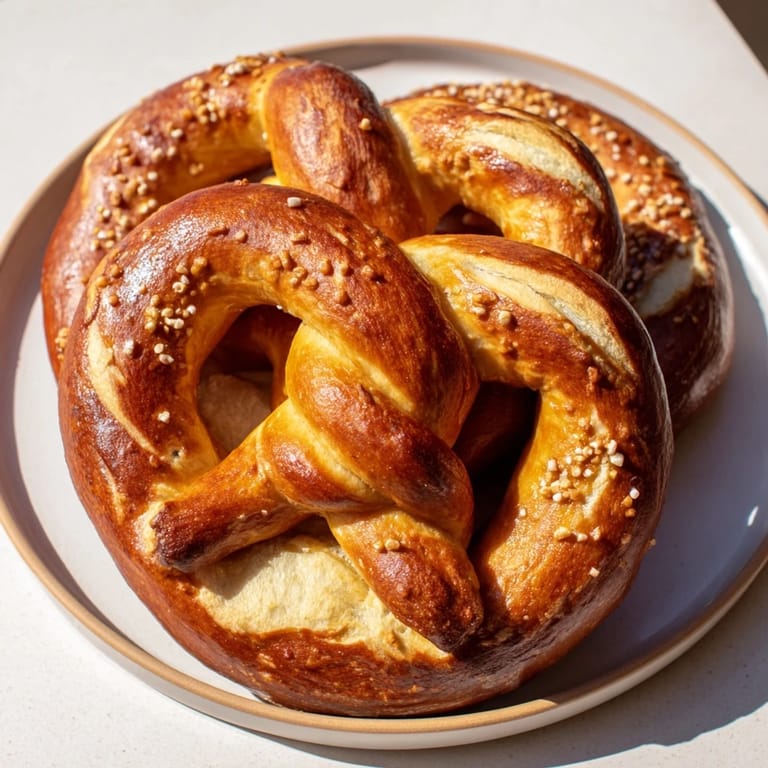
Save There's something almost magical about the moment a pretzel emerges from boiling water, its surface transformed into that distinctive mahogany shell. I discovered this the hard way one Saturday morning when I decided to wing it without the baking soda bath—those pretzels were fine, but they lacked that characteristic chew and deep color that makes a real pretzel unmistakable. That's when I understood: the baking soda isn't just a step, it's the secret that turns good bread into something worth twisting.
I'll never forget watching my nephew's face light up when he bit into one of these with his eyes closed, then immediately asked for another. It became the thing everyone requested at family gatherings, and suddenly I wasn't just making pretzels—I was making memories in twisted dough form.
Ingredients
- Bread flour: This is what gives pretzels their signature chew; all-purpose flour won't deliver the same structure or bite.
- Active dry yeast: Make sure it's fresh—old yeast leads to flat, sad pretzels that rise reluctantly.
- Warm water: Too hot kills the yeast, too cold and nothing happens; aim for that Goldilocks zone around 110°F.
- Baking soda: This creates the pretzel's distinctive dark brown exterior and that subtle chewiness only real pretzels have.
- Coarse pretzel salt: It won't dissolve into the dough like table salt does; use the big crystals for that authentic pretzel bite.
- Egg wash: Gives that beautiful glossy finish that catches the light when they come out of the oven.
Tired of Takeout? 🥡
Get 10 meals you can make faster than delivery arrives. Seriously.
One email. No spam. Unsubscribe anytime.
Instructions
- Wake up the yeast:
- Combine warm water, sugar, and yeast in a large bowl and let it sit for 5 minutes until it's foamy and smells alive. If it doesn't foam, your yeast is done for—start over with a fresh packet.
- Build the dough:
- Add melted butter and salt, then stir in flour one cup at a time until you've got a shaggy, rough dough that's barely holding together. Don't overthink it at this stage.
- Knead to smooth:
- Turn everything onto a floured surface and knead for 5–7 minutes until the dough is smooth, elastic, and springs back when you poke it. Your hands will tell you when it's ready.
- First rise:
- Place the dough in a lightly oiled bowl, cover it with a kitchen towel, and let it sit in a warm spot for about an hour until it's roughly doubled in size. A turned-off oven with the light on works beautifully for this.
- Heat the bath:
- While the dough rises, bring 10 cups of water and baking soda to a rolling boil in a large pot. The baking soda will make the water smell a bit funky, but that's exactly what you want.
- Shape the pretzels:
- Punch down the risen dough and divide it into 8 equal pieces. Roll each piece into a long rope about 20–22 inches, then form the classic pretzel U-shape by twisting the ends around each other twice and folding down to complete the shape.
- The crucial bath:
- One by one, carefully dip each pretzel into the boiling baking soda bath for exactly 30 seconds—no more, no less—then fish it out with a slotted spatula and place it on a parchment-lined baking sheet. This is what separates authentic pretzels from imposters.
- Finish and bake:
- Brush each pretzel generously with egg wash and sprinkle with coarse salt while they're still damp. Bake at 450°F for 12–15 minutes until they're deep golden brown, with a crust that crackles slightly when you tap it.
 Save
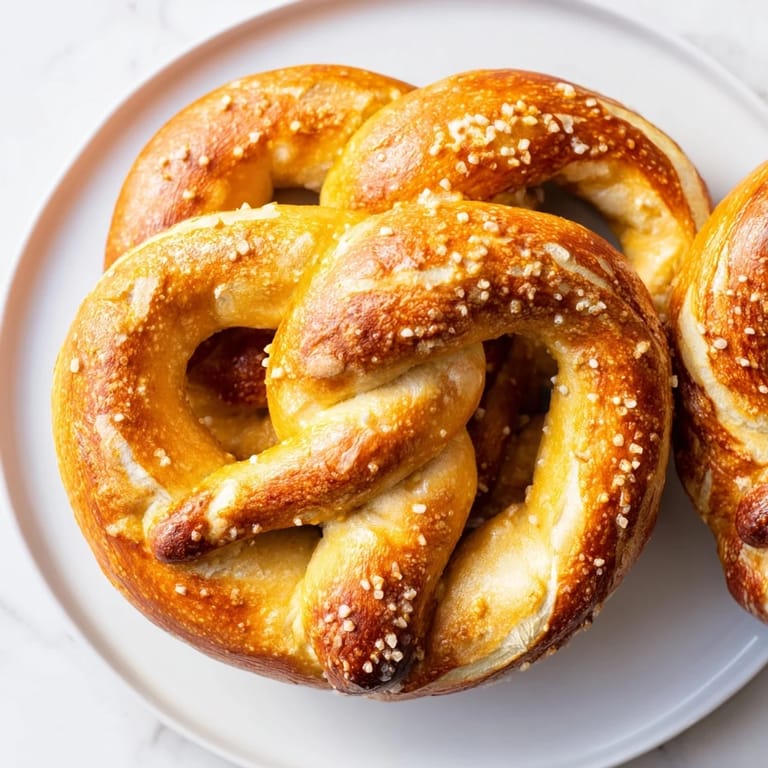
Save There's a quiet satisfaction in pulling a tray of these from the oven, steam rising off them, the kitchen filled with that warm yeasty perfume. That's the moment when you know you've nailed it.
Variations Worth Trying
Once you've mastered the classic, the fun really begins. Skip the salt and brush warm pretzels with melted butter, then dust generously with cinnamon sugar for a sweeter version that's addictive with coffee. Sesame seeds or poppy seeds scattered on before baking add a subtle nuttiness that some people swear by. And if you're feeling adventurous, try a everything bagel seasoning blend for something unexpected that somehow works beautifully with mustard.
The Perfect Dipping Situation
Yellow mustard is classic for a reason—that sharp, tangy kick cuts through the richness of the soft bread perfectly. But spicy brown mustard adds a deeper complexity, and whole grain mustard gives you little bursts of texture. Honey mustard bridges the gap between sweet and savory if you're serving these to skeptics.
Making Them Ahead
These are at their absolute best eaten warm and fresh, but life isn't always cooperative. If you need to make them ahead, store them in an airtight container at room temperature for up to two days, then warm them gently in a 300°F oven for about 5 minutes before serving. You can also freeze the shaped pretzels before baking—just add a couple extra minutes to the baking time straight from the freezer. They're also great the next day split and toasted, almost like pretzel toast with the crispy exterior and warm, chewy center.
- Freeze unbaked pretzels on a baking sheet, then transfer to a freezer bag for up to three months.
- Refresh day-old pretzels by wrapping them loosely in foil and warming in a 350°F oven for about 10 minutes.
- Split and toast them for something that feels almost like a new dish entirely.
 Save
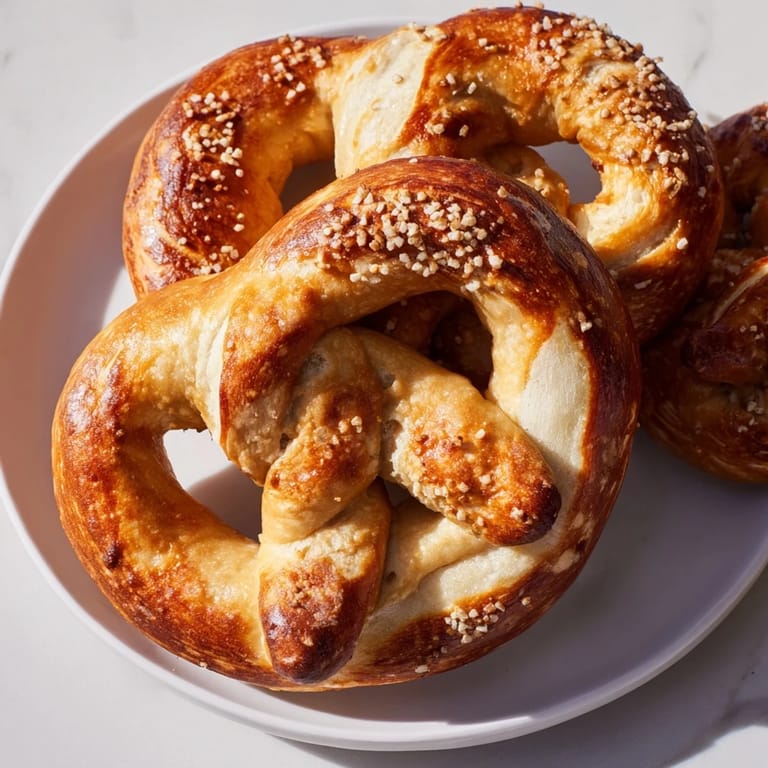
Save Soft pretzels are one of those recipes that rewards you the moment they're done, and making them becomes something you'll find yourself doing again and again. There's something deeply satisfying about shaping warm dough into those iconic twists and watching them transform in the oven.