 Save
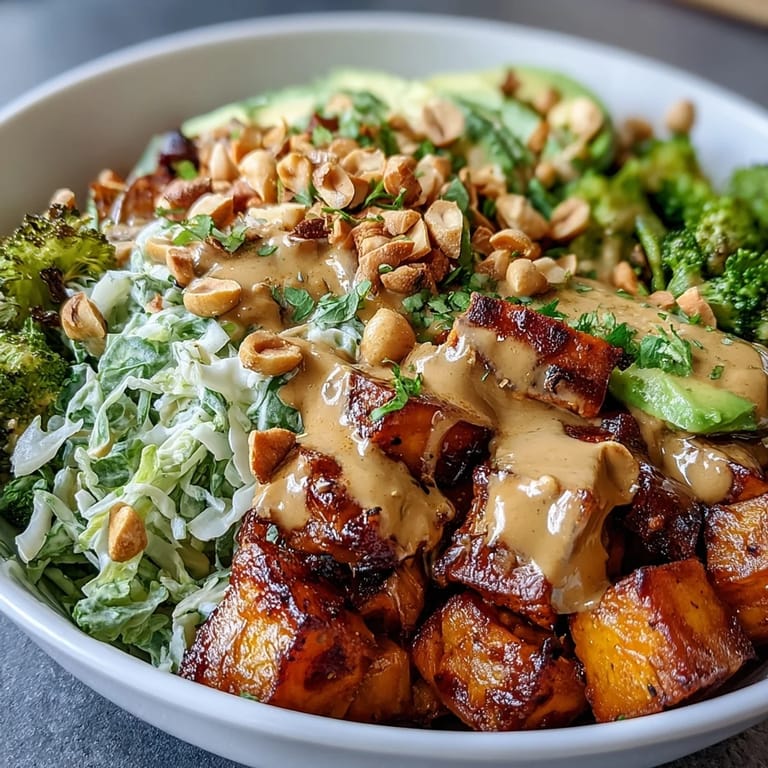
Save My tiny apartment kitchen smelled incredible when I first made this peanut sauce, the sesame oil hitting the warm peanut butter in a way that made my roommate poke her head in from the living room. I had been meal prepping on a Sunday, trying to recreate a bowl I had at a local cafe, but this version ended up even better than the original. Now it is the recipe I turn to when I need something that feels special but comes together easily.
Last winter my friend came over for dinner, exhausted from a new job, and I set out all the components on the counter. We built our bowls together, talking about our weeks while the roasted sweet potatoes still warm from the oven hit the cool crisp vegetables. She texted me the next morning asking for the recipe, and now she makes it every Sunday for her work lunches.
Ingredients
- 2 medium sweet potatoes: Peeled and diced into half inch cubes, these become the sweet hearty base that contrasts perfectly with the creamy sauce
- 1 tablespoon olive oil: Helps the sweet potatoes develop those golden crispy edges in the oven
- 1/2 teaspoon salt: Enhances the natural sweetness of the potatoes as they roast
- 1/4 teaspoon black pepper: Adds a subtle warmth that balances the sweet elements
- 1 cup broccoli florets: Use bite sized pieces so they are easy to eat with just a fork
- 1 cup shredded green cabbage: Provides a satisfying crunch and freshness that cuts through the rich peanut sauce
- 1/2 cup grated carrots: Bring natural sweetness and vibrant color to the bowl
- 1 avocado: Sliced at the end adds creaminess that complements the peanut sauce beautifully
- 1/4 cup fresh cilantro: Chopped generously brings brightness and cuts through the rich flavors
- 1/4 cup chopped peanuts: Sprinkled on top for essential texture and nutty flavor
- 1/2 cup natural peanut butter: The creamy base for the sauce, use one with just peanuts and salt for the best flavor
- 2 tablespoons soy sauce: Adds the essential umami and salty depth, use tamari to keep it gluten free
- 1 tablespoon maple syrup: Just enough sweetness to balance the salty and acidic elements
- 1 tablespoon lime juice: Fresh is crucial here, it brightens the entire sauce and prevents it from feeling too heavy
- 1 teaspoon sesame oil: A little goes a long way, this is the secret ingredient that makes the sauce taste restaurant quality
- 2 to 3 tablespoons warm water: Add gradually until you reach your desired consistency
Tired of Takeout? 🥡
Get 10 meals you can make faster than delivery arrives. Seriously.
One email. No spam. Unsubscribe anytime.
Instructions
- Roast the sweet potatoes:
- Preheat your oven to 400°F and toss the diced sweet potatoes with olive oil, salt, and pepper until well coated. Spread them in a single layer on a parchment lined baking sheet and roast for 25 to 30 minutes, flipping halfway through, until they are tender and have golden brown edges.
- Prep the fresh vegetables:
- While the potatoes roast, cut the broccoli into small florets, shred the cabbage, grate the carrots, and slice the avocado just before serving to keep it fresh.
- Make the peanut sauce:
- Whisk together the peanut butter, soy sauce, maple syrup, lime juice, and sesame oil in a small bowl. Start with 2 tablespoons of warm water and add more a teaspoon at a time until the sauce is smooth and pourable like warm honey.
- Assemble your bowls:
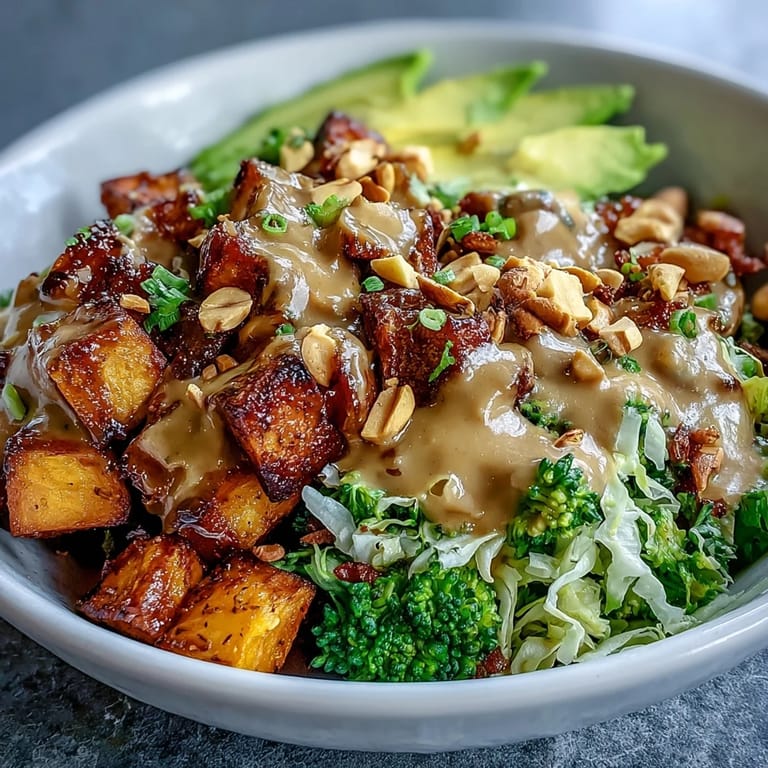
- Divide the broccoli, cabbage, carrots, and sliced avocado among four bowls. Top each bowl with the roasted sweet potatoes while they are still warm. Drizzle generously with the peanut sauce and finish with fresh cilantro and chopped peanuts.
 Save
Save My partner who swore he hated sweet potatoes tried this on a random Tuesday and went back for seconds. Now he requests it weekly, and I have caught him eating the peanut sauce straight from the jar with a spoon more than once.
Make It Your Own
The beauty of this bowl is how easily it adapts to whatever you have in your refrigerator. Sometimes I add massaged kale when I need to use up a bunch from my CSA, or I swap in roasted cauliflower when sweet potatoes feel too heavy for summer.
Protein Additions
While this bowl is satisfying on its own, adding protein makes it even more filling for active days. Baked tofu cubes work wonderfully here, or edamame sprinkled on top adds protein without any extra cooking.
Sauce Variations
If you are allergic to peanuts, almond butter and sunflower seed butter both make excellent substitutes with slightly different flavor profiles. For extra heat, add a teaspoon of sriracha or a pinch of red pepper flakes to the sauce.
- Double the sauce recipe and keep it in the refrigerator for quick lunches all week
- Roast extra sweet potatoes on the weekend to streamline weeknight assembly
- The sauce is also fantastic on grain bowls or as a dip for spring rolls
 Save
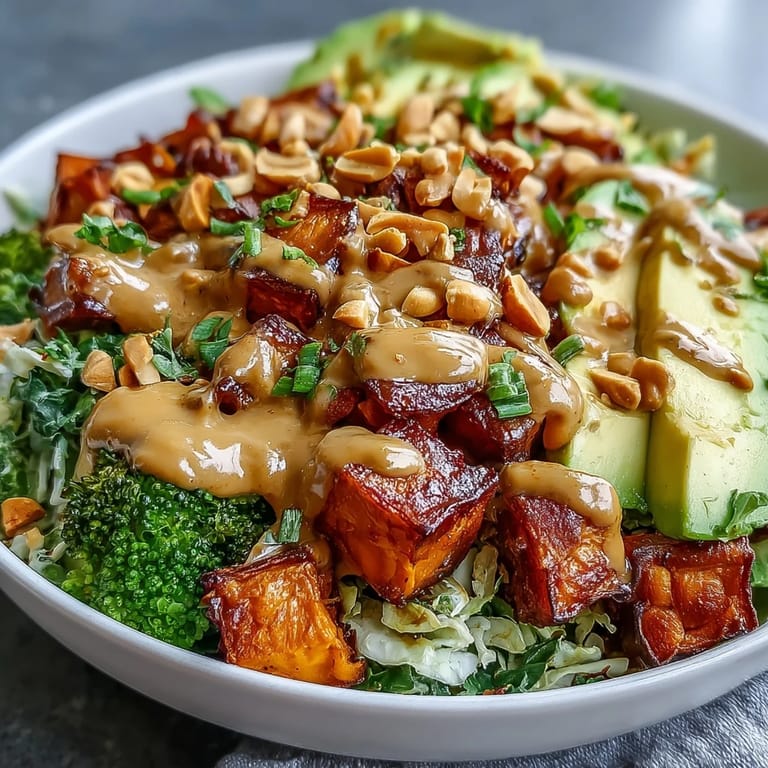
Save This bowl is proof that the most satisfying meals often come from the simplest ingredients, thoughtfully combined. Hope it becomes a staple in your kitchen too.
Recipe FAQs
- → Can I make these bowls ahead for meal prep?
Absolutely. Store roasted sweet potatoes, chopped vegetables, and peanut sauce in separate airtight containers for up to 4 days. Assemble bowls just before serving and add avocado and garnishes fresh to maintain optimal texture.
- → What protein additions work well?
Baked tofu, edamame, chickpeas, or grilled chicken pair beautifully. For tofu, press and cube it before roasting alongside the sweet potatoes. Edamame can be added raw or steamed, while chickpeas can be roasted until crispy.
- → How can I adjust the peanut sauce consistency?
Start with 2 tablespoons of warm water and whisk thoroughly. Add more water one tablespoon at a time until you reach your desired thickness. The sauce will thicken slightly when refrigerated, so thin with additional water before serving if needed.
- → What vegetables can I substitute?
Snap peas, red bell pepper, cucumber, shredded Brussels sprouts, or roasted cauliflower work wonderfully. Use whatever fresh vegetables you have on hand or what's in season. The key is maintaining variety in textures and colors.
- → Is this dish freezer-friendly?
The roasted sweet potatoes and peanut sauce freeze well separately for up to 3 months. However, fresh vegetables like avocado and cucumber don't freeze well. Assemble bowls with thawed components and add fresh garnishes before serving.
- → Can I use a different nut butter?
Almond butter and cashew butter both work as delicious alternatives to peanut butter. Sunflower seed butter makes for a nut-free option. The flavor profile will shift slightly, but the creamy texture remains.