 Save
Save The first snowflakes were just starting to dust the windowsill when I decided this soup needed to happen. Something about the way the light hit my kitchen counter made me crave that particular warmth that only comes from a pot bubbling away on the stove. I'd been putting off making minestrone for years, convinced it required some secret Italian grandmother knowledge I didn't possess, but that afternoon I just went for it.
My friend Sarah dropped by unexpectedly while it was simmering, and she ended up staying for three bowls. We stood in the kitchen with the steam fogging up the windows, just talking and eating directly from our mugs. That's when I knew this recipe wasnt just soup—it was the kind of dinner that makes people linger longer than they planned.
Ingredients
- Olive oil: This creates the foundation for all those vegetables to get soft and sweet
- Yellow onion, carrots, celery: The holy trinity that gives minestrone its classic flavor base
- Garlic cloves: Don't be shy here, the garlic mellows beautifully in the broth
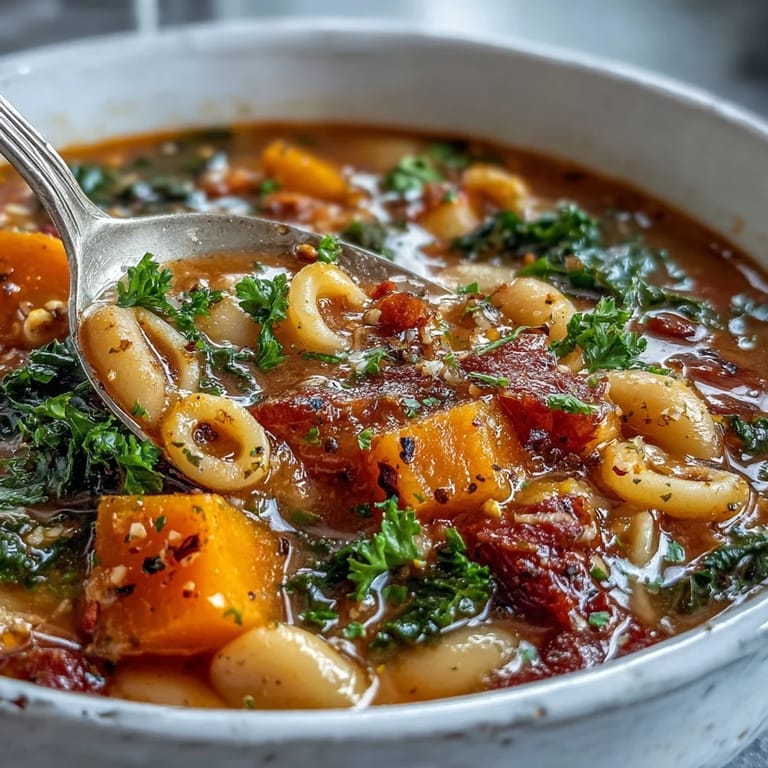
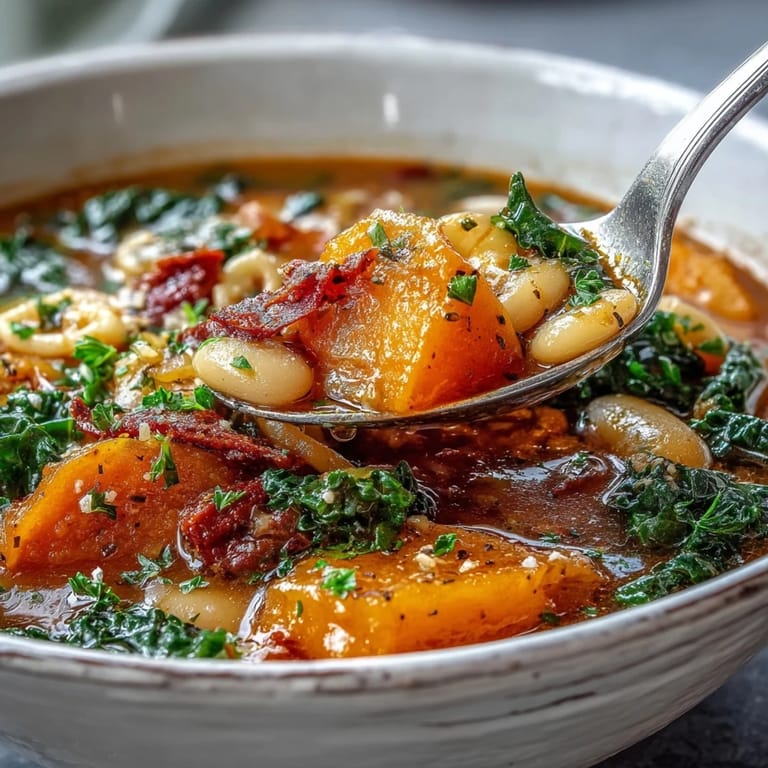
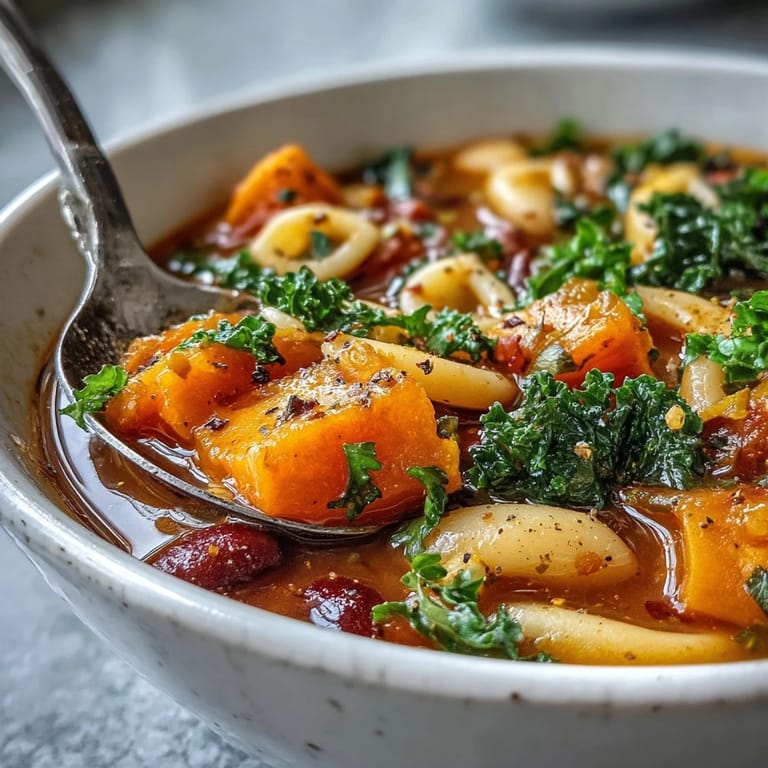
- Butternut squash: Peeled and diced into small cubes so they cook through evenly
- Zucchini: Adds a fresh element that keeps the soup from feeling too heavy
- Fresh kale: Remove those tough stems, they'll make the soup bitter
- Canned diced tomatoes: The juices are essential for that rich, red broth
- Cannellini beans: Creamy and mild, they're perfect here
- Small pasta: Ditalini holds up better than larger shapes that can get mushy
- Vegetable broth and water: The combination keeps things from getting too intense
- Dried oregano, thyme, rosemary: These Mediterranean herbs make it unmistakably Italian
- Red pepper flakes: Just a whisper of heat to wake everything up
- Fresh parsley: Stir it in right at the end for a pop of brightness
- Parmesan cheese: The saltiness completes all those flavors
Tired of Takeout? 🥡
Get 10 meals you can make faster than delivery arrives. Seriously.
One email. No spam. Unsubscribe anytime.
Instructions
- Build your flavor foundation:
- Heat that olive oil in a large pot over medium heat, then add your onion, carrots, and celery. Let them soften and get fragrant for about five to six minutes—you'll catch a sweet aroma that tells you you're on the right track.
- Wake up the garlic:
- Stir in your minced garlic and let it cook for just one minute until it becomes fragrant. Watch closely here because garlic goes from perfect to burned faster than you'd think.
- Add the squash and zucchini:
- Toss in your butternut squash and zucchini, cooking them for four to five minutes while stirring occasionally. This quick sauté helps the vegetables start developing flavor before they hit the liquid.
- Create the broth:
- Pour in those diced tomatoes with all their juices, along with your vegetable broth and water. Let everything come to a gentle boil, watching the transformation as the liquid turns that gorgeous rusty red.
- Season and simmer:
- Stir in your oregano, thyme, rosemary, and red pepper flakes if you're using them. Reduce the heat and let it simmer uncovered for about fifteen minutes while your kitchen starts smelling like an Italian restaurant.
- Add the heartiness:
- Drop in your cannellini beans and pasta, then continue simmering for another eight to ten minutes. You'll know it's done when the pasta is tender and your squash yields easily to a spoon.
- Wilt the kale:
- Stir in that chopped kale and let it cook for just two to three minutes until it wilts down into the soup. Taste everything now and adjust your salt and pepper until the flavors pop.
- Finish with finesse:
- Remove the pot from heat and stir in your fresh parsley. Let it sit for about five minutes before serving to let all those flavors really get comfortable with each other.
 Save
Save Last winter, I made a massive batch for a Sunday dinner with my family, and my dad kept going back for refills until we were scraping the bottom of the pot. He's not usually one for seconds, let alone fourths, but there was something about this particular combination of flavors that just worked.
Making It Your Own
Sometimes I swap in kidney beans or chickpeas if that's what's in my pantry, and honestly, the soup never complains. The beauty of minestrone is its flexibility—it's more about the method than exact measurements. I've even used spinach instead of kale in a pinch, and while the texture changes slightly, the soul of the soup remains the same.
The Bread Factor
Let's talk about what you're dunking into this soup. A crusty sourdough or ciabatta is non-negotiable in my house. I like to slice mine thick, give it a quick toast, and rub it with a raw garlic clove while it's still warm. The way that bread soaks up the tomato broth is almost better than the soup itself.
Leftover Magic
This is one of those rare soups that actually improves overnight. The flavors meld together in ways they can't achieve in a single hour of cooking. I portion mine into glass containers for easy weekday lunches, and honestly, I look forward to that leftover spoonful more than the initial dinner. Just add a splash of water when reheating since the pasta will have drunk up some of the broth.
- Freeze individual portions for up to three months, just leave the pasta out if you plan on freezing
- Reheat gently over low heat, stirring occasionally to prevent the bottom from scorching
- A drizzle of good olive oil right before serving brings everything back to life
 Save
Save There's something deeply satisfying about a recipe that asks for so little but gives back so much warmth. Hope this brings coziness to your kitchen table too.
Recipe FAQs
- → Can I make this minestrone ahead of time?
Absolutely. This actually tastes better the next day as flavors meld. Store in the refrigerator for up to 4 days, adding a splash of broth when reheating since pasta absorbs liquid.
- → What pasta works best for this soup?
Small shapes like ditalini, elbow macaroni, or small shells hold up well in broth. Gluten-free pasta works too—add it separately to prevent overcooking if meal prepping.
- → Can I freeze this soup?
Freeze without the pasta for best results. The pasta becomes mushy when frozen. Cook fresh pasta when reheating, or freeze fully cooked portions and expect softer texture.
- → How do I make this vegan?
Simply omit the Parmesan cheese or use a dairy-free alternative. The rest of the ingredients are naturally plant-based, including the vegetable broth base.
- → What can I substitute for butternut squash?
Try other winter squashes like acorn, delicata, or pumpkin. Sweet potatoes also work beautifully and add similar sweetness and texture to the broth.
- → Is the kale necessary?
Not essential—spinach or Swiss chard make excellent substitutes. Add these greens in the last 2 minutes of cooking just until wilted, as they cook faster than kale.