 Save
Save My grandmother had a cast iron skillet that seemed to produce magic—particularly when it came to sausage gravy. I watched her hands work the biscuit dough with such confidence, barely touching it, and I remember asking why she didn't knead it like bread. She smiled and said the less you bother it, the more it thanks you with fluff. That lesson stuck with me, and now whenever I make this breakfast, I hear her voice reminding me to be gentle.
I made this for my roommate on a freezing January morning when she came home upset about something, and we just sat in the kitchen eating these biscuits straight from the pan, not even plating them. By the time we finished, we were laughing about something totally unrelated, and she said the food had nothing to do with it—but I think it did. There's something about warmth and gravy and generosity that shifts a mood.
Ingredients
- All-purpose flour (2 cups): Use a brand you trust; some flours absorb moisture differently, so your buttermilk amount might need a tiny adjustment if your dough feels too wet or dry.
- Baking powder (1 tablespoon): This is your lift—don't skip it or reduce it, or your biscuits will be dense and sad.
- Baking soda (1/2 teaspoon): Works with the buttermilk's acidity to create that tender crumb.
- Salt (1 teaspoon total): Essential for flavor; the gravy will be salty too, so balance as you go.
- Sugar (1 tablespoon): Just a whisper of sweetness that makes the buttery flavor sing.
- Cold unsalted butter (1/2 cup cubed): Cold is non-negotiable—warm butter makes tough biscuits, and that defeats the whole purpose.
- Cold buttermilk (3/4 cup): The tanginess tenderizes the dough; don't substitute regular milk.
- Breakfast sausage (1 pound, crumbled): Choose mild or spicy based on your mood; I usually go spicy because I like the heat.
- All-purpose flour for gravy (1/4 cup): This thickens the milk into something creamy and cohesive.
- Whole milk (3 cups): Full fat makes the gravy richer; skim milk feels thin in comparison.
- Freshly ground black pepper (1/2 teaspoon plus more): This is the soul of the gravy—don't use pre-ground if you can help it.
- Salt for gravy (1/4 teaspoon, adjust): Taste as you cook; sausage brings salt too.
- Cayenne pepper (pinch, optional): A tiny surprise that adds depth without heat.
Tired of Takeout? 🥡
Get 10 meals you can make faster than delivery arrives. Seriously.
One email. No spam. Unsubscribe anytime.
Instructions
- Set your stage:
- Preheat the oven to 450°F and line a baking sheet with parchment paper. You want everything ready before you touch the dough.
- Build the dry mixture:
- Whisk flour, baking powder, baking soda, salt, and sugar in a large bowl. This distributes the leaveners evenly so every biscuit rises equally.
- Cut in the butter:
- Add your cold butter cubes and use a pastry cutter, two forks, or your fingertips to break them into the flour until it looks like coarse breadcrumbs. Some pea-sized pieces of butter are good—they create pockets of steam that make flakiness happen.
- Bring it together gently:
- Pour in the buttermilk and stir just until the dough comes together. Overmixing develops gluten and makes biscuits tough; you want shaggy, barely combined dough.
- Build texture with folds:
- Turn the dough onto a lightly floured surface and gently pat it to about 1 inch thick. Fold it over on itself 2 to 3 times and pat again to 1 inch. These folds create layers without real lamination, and they're why your biscuits will have that rustic, almost-croissant quality.
- Cut and arrange:
- Use a 2.5-inch biscuit cutter to cut straight down (don't twist—twisting seals the edges). Place biscuits close together on the sheet so they rise up and lean on each other, creating soft sides with crispy tops.
- Bake until golden:
- Bake 12 to 15 minutes until the tops are deep golden brown. They'll continue cooking slightly as they cool, so don't overbake.
- Cook the sausage:
- While biscuits bake, crumble the sausage into a large skillet over medium heat and cook until browned and cooked through, breaking it up as it cooks. The sausage should be fully rendered and fragrant.
- Make the roux:
- Sprinkle the flour over the cooked sausage and stir constantly for 1 to 2 minutes until the flour absorbs all the fat and smells toasted. This base prevents lumps in your gravy.
- Add milk slowly:
- Gradually pour in the milk while stirring constantly, scraping the bottom of the skillet to incorporate everything. Going slow prevents lumps from forming and keeps the gravy silky.
- Season and simmer:
- Add the black pepper, salt, and cayenne, then let the gravy simmer gently for 5 to 7 minutes, stirring occasionally, until it thickens enough to coat the back of a spoon. Taste and adjust seasoning—this is your moment to make it perfect.
- Assemble and serve:
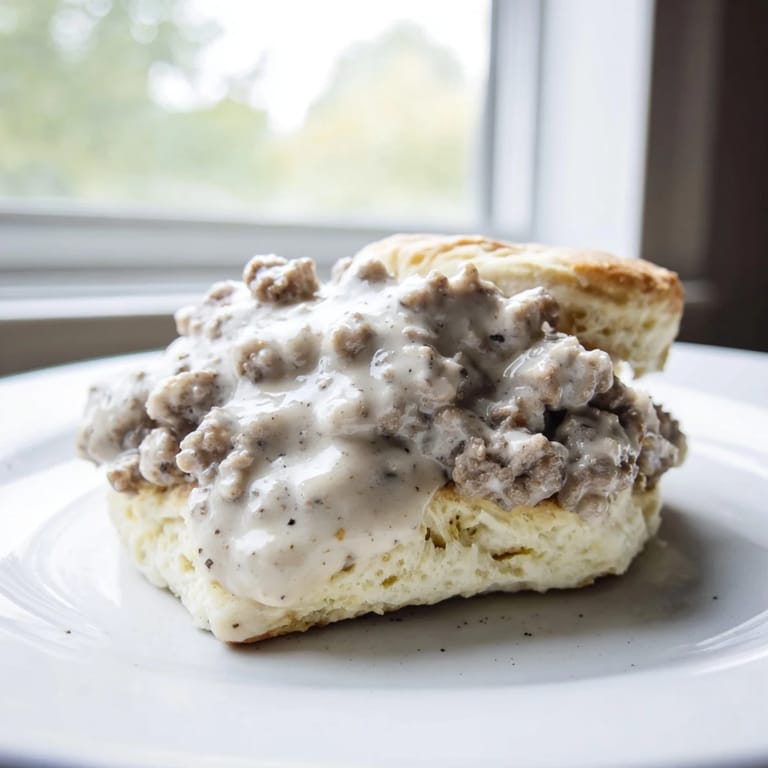
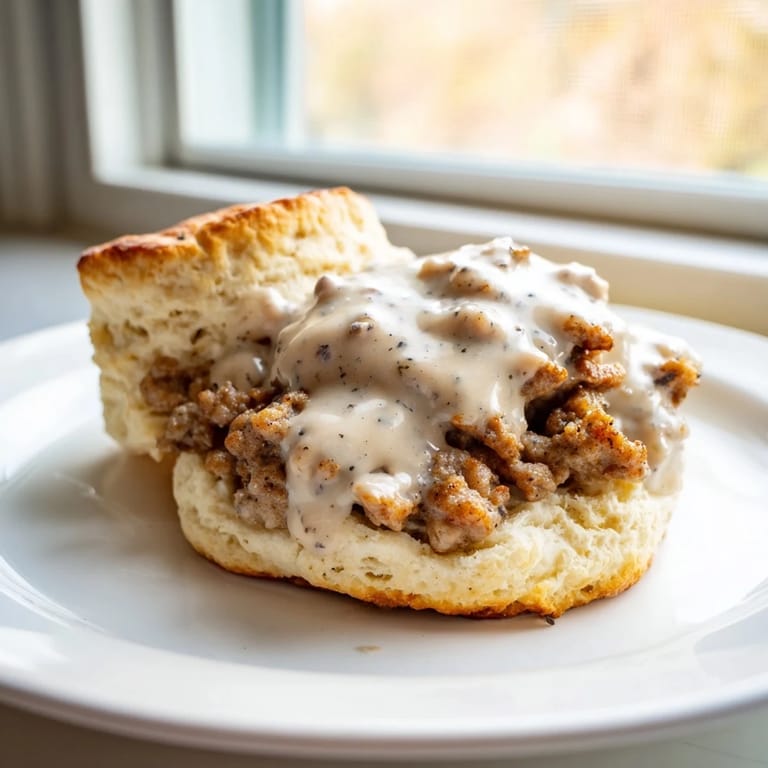
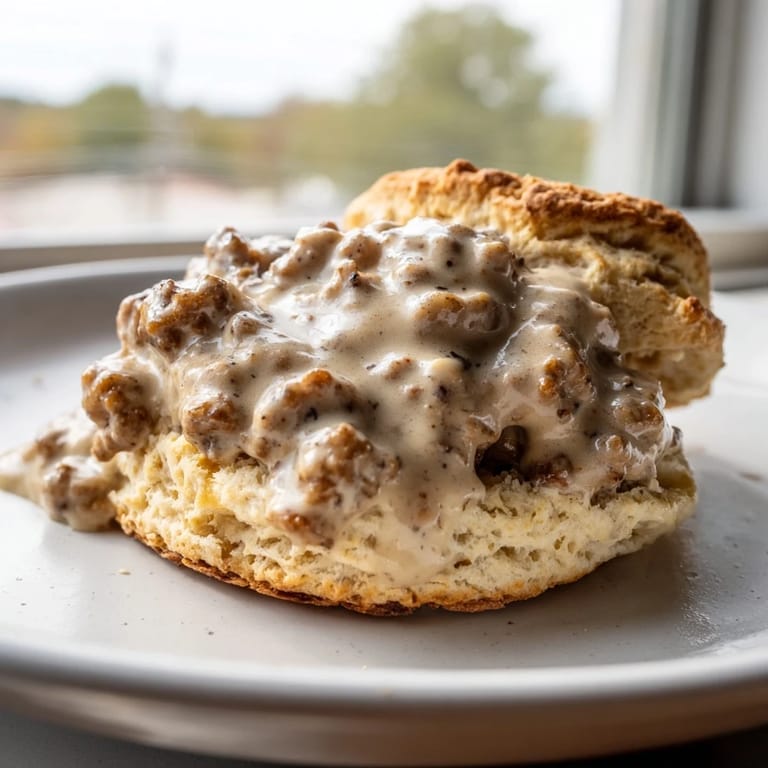
- Split warm biscuits in half and spoon the hot gravy over the top. Serve immediately while everything is warm and the biscuits are still steaming.
 Save
Save There was a morning when my partner came downstairs and the whole kitchen smelled like butter and pepper and sausage, and they just stood in the doorway with this look of pure happiness. No words, just that smell bringing back every breakfast memory at once. That's when I realized this isn't fancy food—it's the opposite. It's simple, generous, and it carries weight.
The Right Biscuit Technique
The secret to truly flaky biscuits is respecting the dough's shyness. Every time I see someone aggressively knead or overwork the dough, I gently interrupt and remind them that we're coaxing, not forcing. The less you handle it, the more tender it becomes. I've made these biscuits with people who swear they can't cook, and the moment they trust the process—the moment they pat instead of press—something clicks and they produce beautiful biscuits.
Sausage Gravy Secrets
The key to silky gravy is patience with the roux and patience when adding the milk. I used to rush this step and end up with a lumpy situation that no amount of stirring could fix. Now I take my time, cooking that flour in the sausage fat for a full 1 to 2 minutes before introducing the milk, and I add the milk in a thin stream while whisking. The first time I did this correctly, my gravy was so smooth it seemed impossible. The second time, I understood it wasn't luck—it was technique.
Making It Yours
This recipe is a foundation, not a prison. I've added fresh herbs like sage or thyme to the sausage and it was wonderful. I've experimented with different pepper levels depending on who was eating. Some mornings I crack an egg over the biscuits before the gravy, and it's a whole different experience. The beauty of this dish is that it's forgiving enough to play with while still delivering that core comfort every time.
- Try a pinch of smoked paprika in the gravy for a subtle smokiness that lingers.
- If you want less pepper heat, reduce it to 1/4 teaspoon; if you love it spicy, go up to a full teaspoon.
- Leftover biscuits are best eaten within a few hours, but they're still delicious cold the next day, especially split and toasted with butter.
 Save
Save This meal lives in that sacred space where effort and reward are perfectly balanced—it doesn't take long, but it tastes like you've been cooking all morning. Make it for yourself on a quiet morning or for someone you love, and watch how food this honest brings people close.
Recipe FAQs
- → How can I ensure flaky biscuits?
Use cold butter and handle the dough gently, folding it a few times without overmixing to create distinct flaky layers.
- → What type of sausage is best for the gravy?
Breakfast sausage with mild or spicy seasonings works well to add savory depth and peppery flavor to the gravy.
- → Can I adjust the spiciness of the gravy?
Yes, adjust the amount of black pepper and cayenne pepper to suit your preferred spice level.
- → What's the best way to thicken the gravy?
Sprinkling flour over the cooked sausage and cooking it briefly before adding milk helps thicken the gravy smoothly.
- → How should the biscuits be served?
Split the warm biscuits and spoon the hot sausage gravy generously over the top for the best taste and texture.