 Save
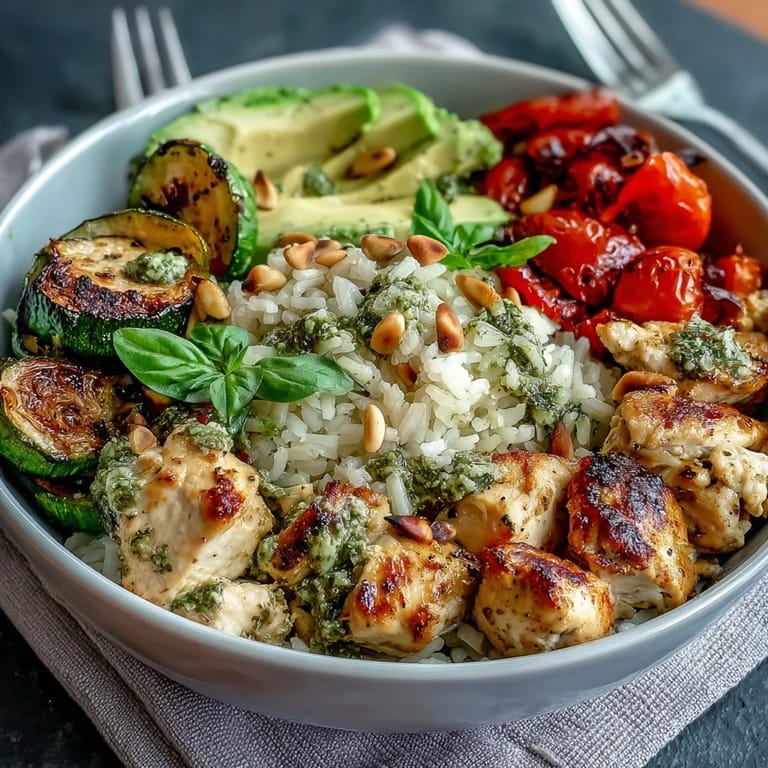
Save There's something about the way pesto chicken catches the light when you first plate it—those vibrant green streaks through tender chicken pieces that somehow promise everything good about summer, even when it's not. I stumbled into this bowl recipe on a Tuesday afternoon when my kitchen felt too quiet and my fridge was overflowing with basil that refused to wait another day. What started as an improvised way to use up vegetables became the meal I now make whenever I need to feel grounded, fed, and a little bit proud of what I've made.
I made this for my sister during one of those unexpected spring visits where she showed up with just a backpack and a vague plan to stay for a few days. She was stressed about something work-related that I can't quite remember now, but I remember her taking the first bite and how her shoulders actually dropped an inch. She ate two full bowls and asked for the recipe before she left, which felt like the highest compliment.
Ingredients
- Boneless, skinless chicken breast or thighs (500 g): Thighs stay juicier if you're not watching the heat like a hawk, but breasts work beautifully too—just don't overcook them by more than a minute or two.
- Basil pesto (4 tbsp): Store-bought pesto is completely fine and honestly saves you time; homemade is lovely when you have fresh basil but not required here.
- Olive oil (1 tbsp): This helps the pesto coat the chicken evenly and prevents sticking when you cook it.
- Salt and black pepper: Season the marinade generously—this is where half your flavor lives.
- Jasmine or basmati rice (240 g): Jasmine rice has this subtle floral quality that complements pesto beautifully; basmati works if that's what you have.
- Water (480 ml) and salt for rice: The ratio matters more than you'd think—too much water and your rice gets mushy, too little and you'll have crunchy bits.
- Cherry tomatoes (200 g): Halving them lets their sweetness shine without overwhelming the other flavors on your plate.
- Cucumber (1 medium): Diced small, it adds coolness and crunch that balances the richness of the pesto chicken.
- Red onion (1 small): Thin slices stay crisp and add a gentle bite that ties everything together.
- Avocado (1 medium): Slice it just before assembling so it doesn't oxidize and turn that sad grayish-brown color.
- Baby spinach or mixed greens (60 g): Fresh greens underneath everything else add nutrition and a peppery note that complements pesto.
- Toasted pine nuts (2 tbsp): Optional but worth it—they add a buttery crunch that makes the bowl feel more intentional.
- Fresh basil leaves: A handful scattered on top reminds you what you're eating and smells incredible.
Tired of Takeout? 🥡
Get 10 meals you can make faster than delivery arrives. Seriously.
One email. No spam. Unsubscribe anytime.
Instructions
- Marinate your chicken:
- Combine chicken pieces with pesto, olive oil, salt, and pepper in a bowl, mixing until every piece gets coated in that gorgeous green. Even 15 minutes makes a difference, but if you have time, cover it and let it sit in the fridge for a couple hours—the longer it sits, the deeper the pesto flavor becomes.
- Get the rice going:
- Rinse your rice under cold water until the water runs clear, which takes about a minute and removes excess starch so it doesn't get gummy. Bring salted water to a boil, add rice, turn heat down low, cover it, and let it cook undisturbed for 12-15 minutes until the water disappears and the rice is tender.
- Cook the chicken while rice steams:
- Heat a large skillet over medium heat and add your marinated chicken pieces, stirring occasionally as they cook for 6-8 minutes until they're cooked through and the edges catch a little color. You'll know it's ready when there's no pink inside and the pesto has kind of caramelized on the outside.
- Prep your fresh vegetables:
- While everything cooks, halve your tomatoes, dice the cucumber, thinly slice the red onion and avocado, and give your greens a quick rinse. The goal is to have everything ready so assembly feels easy and fast.
- Fluff the rice and assemble:
- When the rice is done, let it rest covered for 5 minutes, then fluff it gently with a fork to separate the grains. Divide rice among 4 bowls and start layering—chicken first, then a handful of greens, then your vegetables arranged however makes you happy.
- Finish and serve:
- Top each bowl with pine nuts and a few fresh basil leaves, then serve immediately while the chicken is still warm and everything feels fresh. It also tastes great at room temperature if you're eating it later.
 Save
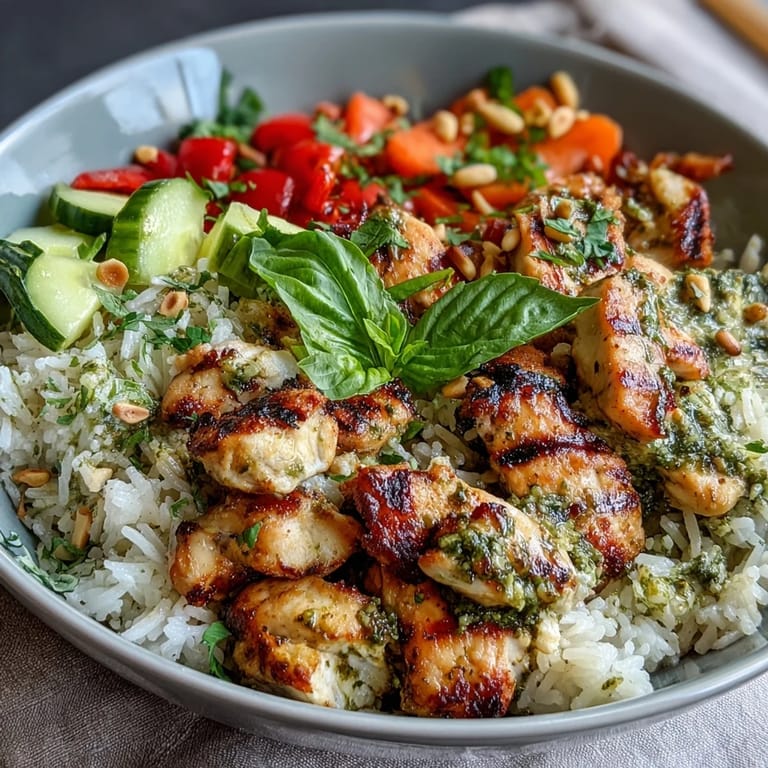
Save There was a moment last summer when I made this for three friends who showed up unannounced on a Friday evening, all of us too tired to go out but hungry for something that felt intentional. We sat on my kitchen counter eating these bowls, not talking about much, just the sound of forks and the smell of basil still hanging in the air, and it felt like enough.
Why This Bowl Works
The magic of a pesto chicken bowl is that it's balanced without feeling like you're thinking about nutrition—you get protein from the chicken, carbs from the rice, healthy fats from the avocado and olive oil, and a rainbow of vegetables that add both nutrition and visual interest. The pesto does most of the heavy lifting flavor-wise, so you're not stuck in the kitchen tweaking seasonings or making complicated sauces. It's the kind of meal that tastes impressive but doesn't ask much of you, which is honestly the best kind of cooking.
Making This Your Own
Once you understand the basic structure—marinated protein, grain base, fresh vegetables, fresh herbs—you can pivot this recipe in a dozen different directions depending on what you have or what you're craving. I've made it with quinoa instead of rice when I wanted something earthier, substituted grilled zucchini and bell peppers for cucumber and tomato in the middle of winter, and once even topped it with crumbled feta and a drizzle of balsamic because I was curious and it worked perfectly.
Storage and Leftovers
The best part about this bowl is that it works beautifully as meal prep—you can cook the rice and chicken ahead and store them in separate containers, then assemble fresh bowls each time you eat. Fresh vegetables stay crunchier if you don't dress them or mix them with the warm rice until right before you eat, which is why I always store components separately. This way you can eat it as many times as you want without it getting soggy or sad, and you can adjust quantities based on what you're actually hungry for that day.
- Store cooked chicken and rice in separate airtight containers in the fridge for up to 4 days.
- Keep fresh vegetables in a separate container and assemble bowls as you eat them to maintain crispness and texture.
- Avocado slices best on the day you eat it, so wait until the last minute to slice and add it.
 Save
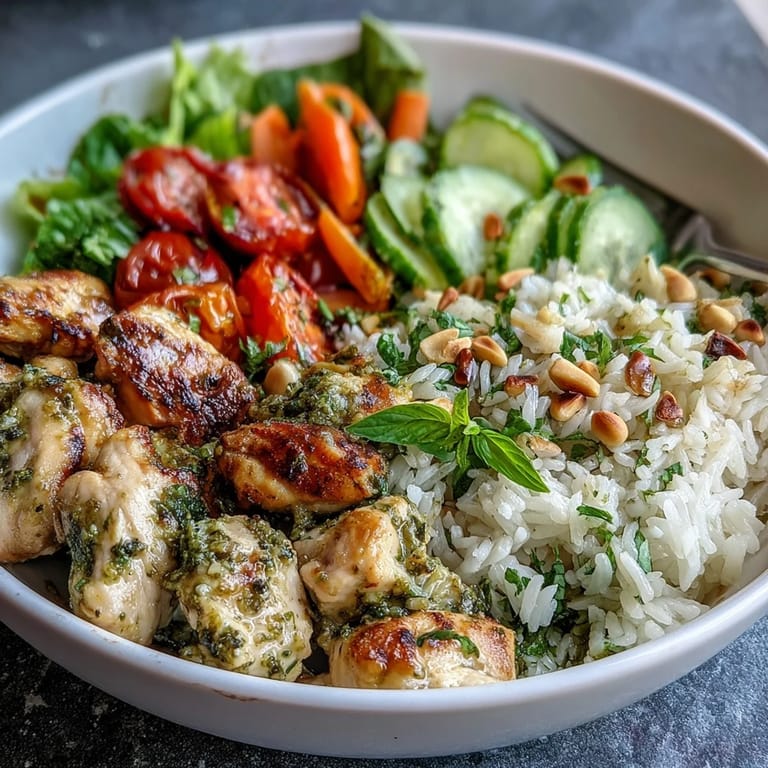
Save This bowl has become my answer to that late afternoon question of what to cook when you want something that feels nourishing and intentional but doesn't require you to spend hours in the kitchen. It's proof that simple ingredients treated with a little care and attention can taste like you actually tried.
Recipe FAQs
- → How long should I marinate the chicken?
Marinate the chicken for at least 15 minutes to allow the pesto flavors to penetrate. For deeper flavor, you can refrigerate for up to 2 hours before cooking.
- → Can I use store-bought pesto?
Yes, store-bought basil pesto works perfectly well. Choose a high-quality brand for the best flavor, or make your own if you prefer controlling the ingredients.
- → What can I substitute for rice?
For a lower-carb option, substitute jasmine or basmati rice with cauliflower rice or quinoa. Both alternatives work beautifully with the pesto chicken and vegetables.
- → How should I store leftovers?
Store leftover components separately in airtight containers in the refrigerator. The rice, chicken, and vegetables keep best when stored individually for up to 3 days.
- → Is this suitable for meal prep?
Absolutely. Prepare all components in advance and assemble when ready to eat. The flavors actually improve after marinating longer, making it ideal for weekly meal planning.
- → Can I make this dairy-free?
Yes, use dairy-free pesto or make your own without Parmesan cheese. The rest of the bowl naturally contains no dairy, so this adjustment makes the entire meal dairy-free.