 Save
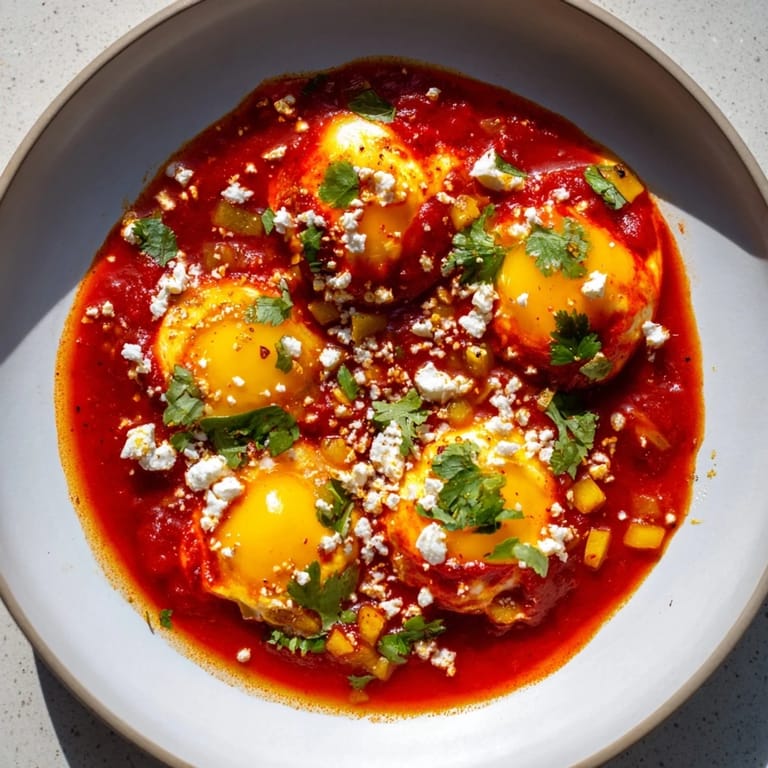
Save The first time I made shakshuka on a lazy Sunday morning, I wasn't trying to impress anyone—I just had half a bell pepper from yesterday's dinner, a can of tomatoes, and eggs that needed using. Twenty minutes later, my kitchen smelled like cumin and caramelized onions, and I understood why this dish has been feeding people across the Mediterranean for generations. There's something almost meditative about watching those eggs nestle into the crimson sauce, their whites turning opaque while the yolks stay soft and golden.
I made this for my brother once when he showed up unannounced on a Thursday evening, completely famished. I had nothing fancy in the house, but something about the smell of spiced tomatoes simmering away seemed to calm him down instantly. We sat at the kitchen counter passing bread back and forth, using it to scoop up that tangy, peppery sauce, and he actually put his phone down—something that never happens. That's when I realized shakshuka wasn't just breakfast food; it was a conversation starter.
Ingredients
- Yellow onion: One medium onion diced creates the sweet, caramelized base that makes this whole dish work—don't skip this step or rush it.
- Red and green bell peppers: Together they add natural sweetness and a subtle earthiness that balances the spice beautifully.
- Garlic cloves: Three minced cloves are your flavor anchor; any less and the sauce tastes flat, any more and it becomes overwhelming.
- Canned diced tomatoes: The 28 oz can is your canvas—look for ones without added sugars if you can, they taste cleaner.
- Jalapeño: Optional but worth it; the heat brings everything into focus without dominating.
- Olive oil: Two tablespoons is generous but necessary—it helps develop those deep flavors in the vegetables.
- Tomato paste: Two tablespoons concentrate the tomato flavor and add body to the sauce in just two minutes of cooking.
- Ground cumin: This is the spice that makes it taste like shakshuka, not just tomato eggs; don't substitute it.
- Smoked paprika: It adds depth and a whisper of smokiness that makes people ask what your secret ingredient is.
- Ground coriander: Half a teaspoon adds a subtle floral note that rounds out the spice profile.
- Cayenne pepper: A quarter teaspoon optional, but if you like heat, it's where the real personality comes through.
- Large eggs: Six eggs for four people means everyone gets one and a half, which feels generous and tastes even better.
- Fresh cilantro or parsley: A quarter cup chopped right before serving brightens everything; cilantro if you love it, parsley if you don't.
- Feta cheese: Crumbled on top, it adds a salty tang that makes the runny yolks taste even richer.
- Crusty bread or pita: This isn't a side; it's essential for soaking up every last drop of that precious sauce.
Tired of Takeout? 🥡
Get 10 meals you can make faster than delivery arrives. Seriously.
One email. No spam. Unsubscribe anytime.
Instructions
- Start your base:
- Heat two tablespoons of olive oil in a large skillet over medium heat, then add your diced onion and both bell peppers. You'll know you're done when the vegetables are soft and the onions have turned translucent and slightly golden at the edges, about five to six minutes.
- Build the aromatic layer:
- Stir in the minced garlic and jalapeño, cooking for just one minute until the kitchen fills with that sharp, garlicky perfume. This moment tells you everything is developing properly.
- Deepen the flavor:
- Add the tomato paste, cumin, smoked paprika, coriander, and cayenne if using, stirring constantly for two minutes. You'll see the spices coat the vegetables in a reddish paste, and that's exactly what you want.
- Create your sauce:
- Pour in the canned tomatoes with all their juices, season generously with salt and pepper, and let it simmer uncovered for ten to twelve minutes, stirring occasionally. The sauce should thicken and darken slightly, the flavors melding into something complex and warm.
- Taste and adjust:
- This is your chance to decide if you want more heat, more salt, or more depth. Taste it honestly and adjust accordingly.
- Make wells for the eggs:
- Use the back of a spoon to make six shallow indentations in the sauce, spacing them evenly so each egg has room to set. Press gently so the sauce pools slightly in each well.
- Nestle in the eggs:
- Crack each egg into a well, being careful not to break the yolk. The eggs will look vulnerable and small against all that red sauce, but trust the process.
- Let them set:
- Cover the skillet and cook for six to eight minutes, until the egg whites turn opaque and slightly firm but the yolks jiggle if you nudge the pan. Cook longer if you prefer firmer yolks, but resist the urge to peek too often.
- Finish and serve:
- Remove from heat, scatter fresh cilantro and crumbled feta over the top if using, and serve immediately with warm crusty bread or pita for scooping and dipping.
 Save
Save There was an evening when my partner's parents came over unexpectedly, and I threw together shakshuka because it felt more special than eggs but honestly just felt like home cooking at its most honest. Watching them tear bread apart to chase the last bits of sauce, seeing them actually relax instead of making polite conversation—that's when I knew this dish transcends the recipe itself.
Make It Your Own
Shakshuka is forgiving in the best way; it's a base that invites experimentation without losing its soul. I've added crumbled chorizo or spicy sausage right before the eggs for nights when we need more protein, and I've swapped the coriander for a pinch of ground ginger when I was feeling adventurous. The beauty is that as long as you respect the core flavors—the spices, the tomato sauce, the gentle cooking of the eggs—you're still making something delicious and authentic.
Vegan and Dietary Swaps
For vegan versions, I've replaced eggs with firm tofu cubes added in the last few minutes of cooking, which absorbs the sauce beautifully and gives you something substantial to bite into. You lose the silky yolk element, but you gain a completely different textural interest that's satisfying in its own way. Skip the feta or use a cashew-based vegan cheese if you want that salty finish.
Serving Suggestions and Pairings
Shakshuka is best served straight from the skillet while everything is still steaming, but it also keeps beautifully in the refrigerator for two or three days if you're thinking about meal prep. Reheat gently on the stovetop rather than the microwave, which tends to scramble the eggs even more. A simple side salad or Greek yogurt dolloped on the side cuts through the richness, and honestly, it pairs as well with breakfast coffee as it does with dinner wine.
- Serve with warm crusty bread, pita, or even soft flatbread for maximum sauce collection.
- Add a squeeze of fresh lemon juice right before eating to brighten all the flavors.
- Make it a full spread by serving alongside a simple green salad or fresh cucumber slices.
 Save
Save Shakshuka reminds me that the most comforting meals don't require fancy technique or rare ingredients—they just need respect for their components and a willingness to slow down while cooking. Once you make this a few times, it becomes muscle memory, something you can throw together on your worst day and have it taste like someone cares.
Recipe FAQs
- → What is the best way to cook the eggs?
Make wells in the simmering sauce and crack eggs directly inside. Cover and cook until the whites are set but yolks remain soft for a creamy texture.
- → Can I adjust the spiciness of the dish?
Yes, control the heat by adding or omitting jalapeño and cayenne pepper according to your preference.
- → What breads pair well with this dish?
Crusty bread, pita, or any sturdy bread is ideal for dipping and soaking up the flavorful sauce.
- → Are there any vegetarian-friendly variations?
The dish is vegetarian by default; for a vegan version, substitute eggs with tofu cubes and omit the feta cheese.
- → How can I enhance the flavor further?
Add cooked chorizo or spicy sausage before adding eggs for a richer, heartier version.