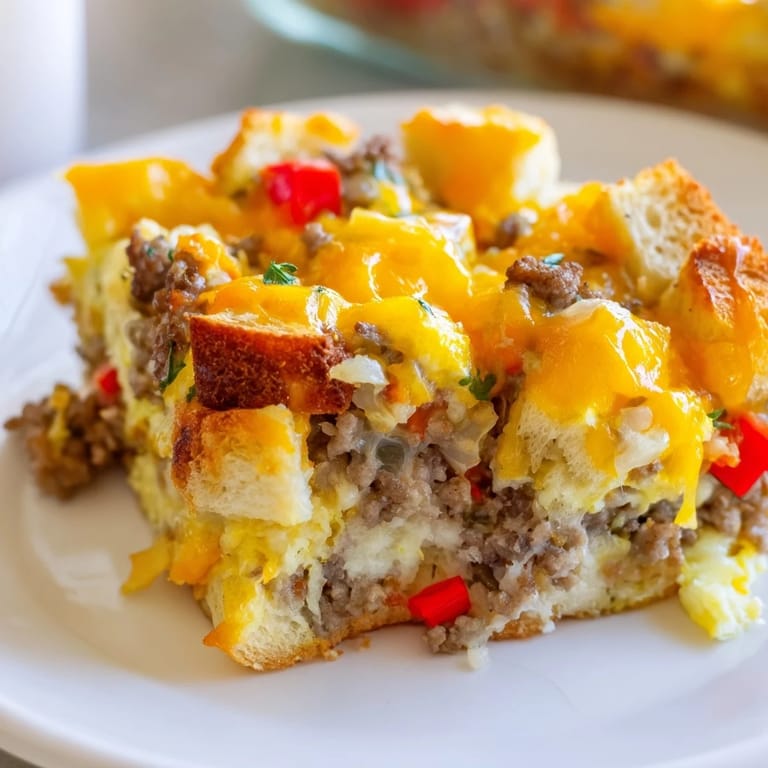
 Save
Save My sister called at 7 a.m. on Thanksgiving, panicked because she'd promised to bring breakfast for 12 people and had completely forgotten to plan it. I found myself walking her through this casserole over the phone while she grabbed ingredients from her pantry, and by the time everyone arrived, she'd pulled something golden and fragrant from the oven that looked like she'd been cooking it all morning. That's when I realized this dish wasn't just about feeding people—it was about buying time to actually enjoy them.
Years ago, I brought this to a potluck where someone had made four different quiches, each more Instagram-worthy than the last. My humble casserole sat beside them looking completely unfussy, and yet it was the only dish that came home empty. One of those quiche bakers actually asked me for the recipe—not because mine looked fancier, but because she'd watched people go back for seconds without hesitation.
Ingredients
- Breakfast sausage (1 pound, casings removed): This is your foundation—buy quality meat because it's what gives the casserole its savory backbone, and brown it properly so it develops real flavor instead of just sitting there steamed and pale.
- Onion and red bell pepper (optional): Skip these if you're in a hurry, but they add layers of sweetness and texture that make it feel less one-note.
- Eggs (8 large): These bind everything together and create that custardy texture when they bake, so don't skimp or use smaller eggs.
- Whole milk (2 cups): This keeps the casserole creamy rather than rubbery—I learned this the hard way when someone suggested I could use less.
- Cheddar and mozzarella cheese (2 cups and 1/2 cup): The cheddar brings sharpness and the mozzarella helps with that melty stretch; together they're better than either alone.
- Day-old bread cut into 1-inch cubes (6 cups): Use French or sourdough if you can—day-old bread is crucial because fresh bread turns to mush, but properly stale bread soaks up the custard without falling apart.
- Salt, pepper, mustard powder, and paprika: These quiet seasonings don't shout, but they keep the dish from tasting flat or one-dimensional.
Tired of Takeout? 🥡
Get 10 meals you can make faster than delivery arrives. Seriously.
One email. No spam. Unsubscribe anytime.
Instructions
- Get your stage ready:
- Preheat your oven to 350°F and grease a 9x13-inch baking dish well so nothing sticks. Think of this as giving yourself permission to relax during the actual cooking.
- Brown the sausage properly:
- In a large skillet over medium heat, cook the sausage while breaking it into small pieces with a spoon—this takes about 5 to 7 minutes and you'll know it's done when there's no pink left. If you're using the onion and bell pepper, add them now and cook for another few minutes until they soften and smell amazing, then drain off any excess fat.
- Build your layers:
- Spread the bread cubes evenly across the bottom of your prepared dish, then scatter the cooked sausage (and vegetables if you used them) on top. Don't overthink this—rustic is the point.
- Make the custard mixture:
- In a large bowl, whisk together the eggs, milk, salt, pepper, mustard powder, and paprika until it looks smooth and uniform. This is where the magic happens—a well-whisked mixture means even cooking throughout.
- Add the cheese to the custard:
- Stir in 1 1/2 cups of cheddar and all the mozzarella, mixing until the cheese is distributed throughout. The cheese will melt into the custard as it bakes, so it doesn't need to be perfectly even.
- Pour and soak:
- Pour this cheese-egg mixture slowly over the bread and sausage, then use a gentle hand to press the bread down—you want it to absorb the liquid but not disintegrate. This is the moment where patience matters; let it sit for a minute and settle.
- Top with the final cheese:
- Sprinkle the remaining cheddar across the top for that golden crust you're after.
- Bake covered, then uncovered:
- Cover the dish with foil and bake for 30 minutes so the inside cooks gently, then remove the foil and bake another 15 minutes so the top can turn golden and the center can set. When it's done, a knife inserted near the center should come out clean.
- Rest before serving:
- Let the casserole sit for 10 minutes after coming out of the oven—this gives the eggs time to finish setting slightly and makes it easier to cut clean portions.
 Save
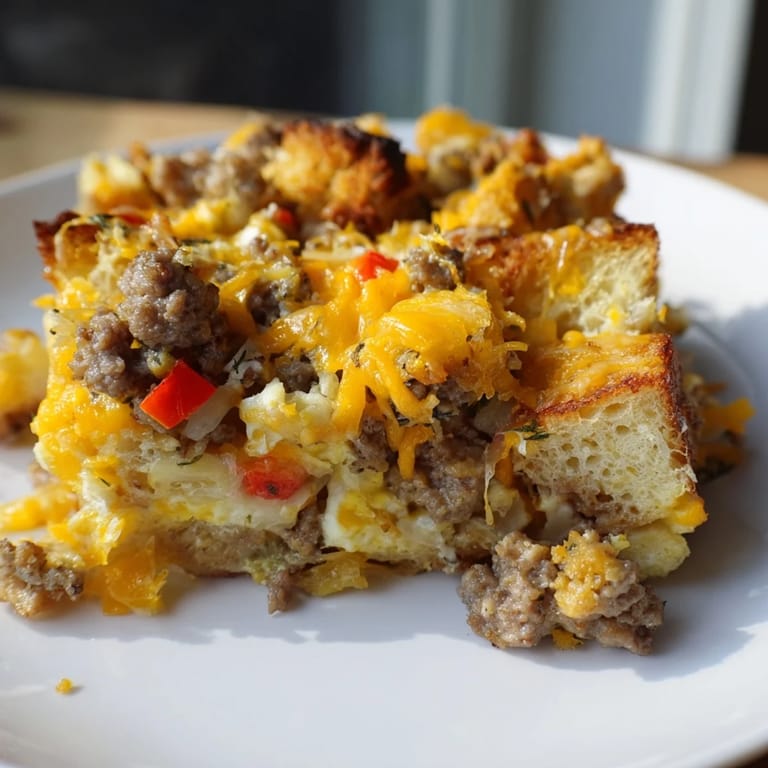
Save I made this for my daughter's soccer team's end-of-season breakfast, expecting polite eating and quick exits. Instead, I watched kids I'd never met before ask for seconds, and their parents linger with coffee asking if they could come back next weekend. It turned out that a simple casserole could somehow make people feel seen and cared for, which I suppose is what feeding people is really about.
Make-Ahead Magic
The beauty of this casserole is that you can assemble it completely the night before, cover it tightly, and refrigerate it overnight. In the morning, just pop it in a cold oven set to 350°F and add about 10 extra minutes to the bake time—the cold dish needs those extra minutes to heat through properly. I've learned that this actually improves the texture because the bread has hours to slowly absorb the custard, creating something more cohesive and intentional than a same-day assembly.
Flavor Variations Worth Trying
Once you've made this classic version, it becomes a canvas for experimentation. Swap the cheddar for sharp Swiss cheese or use a combination of cheddar and pepper jack for something with more heat and complexity. I've added chopped spinach, sautéed mushrooms, or even diced ham when I wanted to shift the flavor profile—the basic structure stays the same, but the personality changes completely. The seasonal vegetables around your kitchen are usually a better guide than any recipe book for what might work.
Serving and Storage Tips
Serve this casserole straight from the oven while it's still warm and slightly steaming, with hot sauce or salsa on the side for anyone who wants an extra kick. Leftovers keep in the refrigerator for up to three days and reheat beautifully—just cover them loosely with foil and warm them at 325°F for about 15 minutes so they don't dry out. I've also learned that this casserole actually freezes well if you need to make it further ahead, though I'd skip the foil covering and wrap it tightly in plastic wrap instead.
- The mustard powder might seem strange, but it's what keeps this from tasting too rich—trust it.
- If your oven runs hot, start checking at the 40-minute mark so the top doesn't over-brown.
- Slice it with a sharp knife and let each piece rest on the plate for a moment before plating—this prevents it from sliding around.
 Save
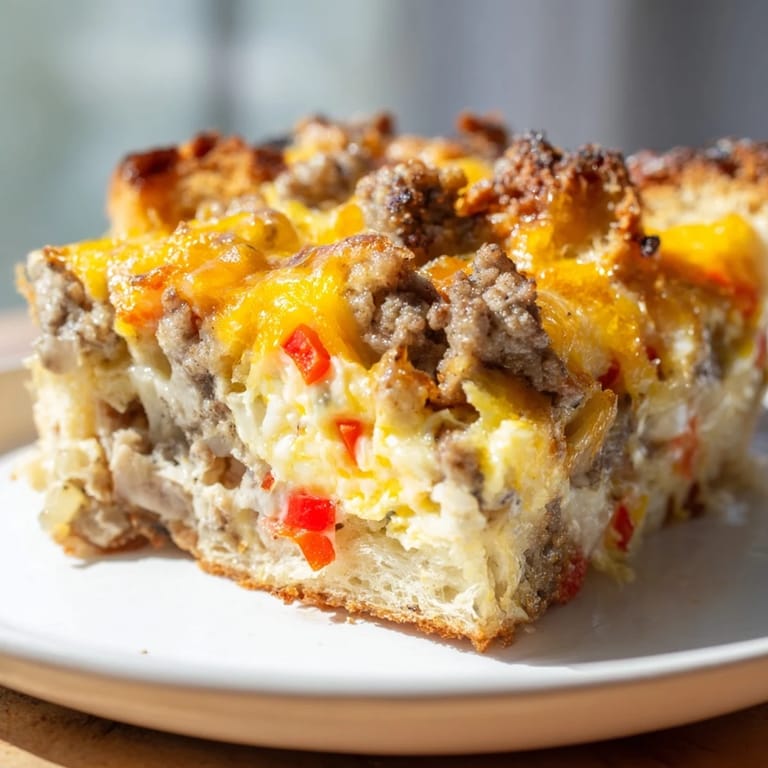
Save This casserole has become my answer to every gathering that needs feeding—not because it's fancy, but because it's honest. It asks only that you show up and do the work, and in return it takes care of everyone at your table.
Recipe FAQs
- → Can I prepare this dish in advance?
Yes, assemble it the night before and refrigerate covered. Bake as directed, adding 10 minutes if baking straight from the fridge.
- → What bread works best for this dish?
Day-old bread such as French or sourdough cubes absorb the egg mixture well and create a golden crust.
- → Can I add vegetables?
Chopped spinach, sautéed mushrooms, or diced bell peppers enhance flavor and add nutrition.
- → What cheeses complement the sausage?
Cheddar and mozzarella blend melt smoothly, but Swiss or pepper jack can be swapped in for new tastes.
- → How should I cook the sausage before baking?
Brown the sausage in a skillet until cooked through, breaking it up for even distribution in the dish.
- → Is there a recommended baking temperature and time?
Bake covered at 350°F (175°C) for 30 minutes, then uncovered for 15 minutes until golden and set.