 Save
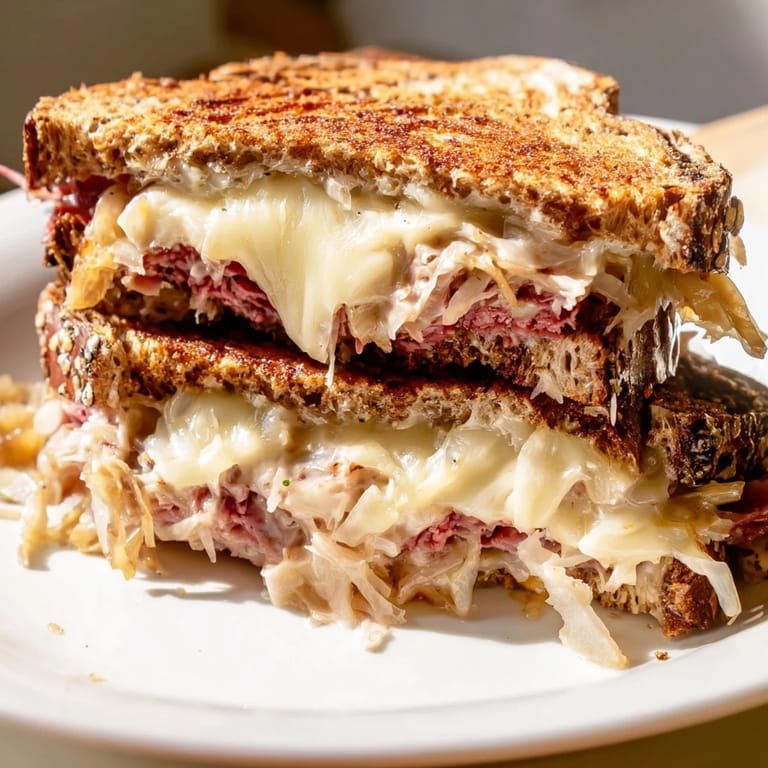
Save The first time I bit into a proper Reuben at a New York deli, I understood why some sandwiches become legends. The bread was still warm, the cheese had that perfect melty stretch, and everything inside worked together like they'd been waiting for each other. Years later, I realized I could recreate that exact moment at home, and now it's become my go-to when I want to feel like I'm sitting at a vinyl booth with a cold pickle on the side.
I made these for my roommate on a random Tuesday when we were both too tired to order delivery, and somehow we ended up sitting on the kitchen counter debating whether pickles belonged on the plate or should be eaten between bites. He voted for between bites, and I haven't looked back since.
Ingredients
- Rye bread: Choose a sturdy slice that won't get soggy; the density is what holds everything together and gives you that satisfying crunch when properly buttered and griddled.
- Swiss cheese: It melts like a dream and has a nutty flavor that doesn't overpower the corned beef; two slices per sandwich ensures every bite gets melted cheese.
- Corned beef: Buy it freshly sliced from the deli counter if you can, or use quality deli meat that's not too thin or it'll dry out during cooking.
- Sauerkraut: Drain it really well in a fine-mesh strainer, otherwise your sandwich becomes a soggy mess within minutes.
- Russian dressing: This is the soul of the sandwich; the tanginess cuts through the richness beautifully.
- Unsalted butter: Softened butter spreads evenly and creates that golden, crispy exterior without burning.
Tired of Takeout? 🥡
Get 10 meals you can make faster than delivery arrives. Seriously.
One email. No spam. Unsubscribe anytime.
Instructions
- Prep your bread and spread:
- Lay out your four rye slices on a cutting board and spread one tablespoon of Russian dressing on one side of each slice. This is your flavor foundation, so don't skimp.
- Build the layers:
- On two of the slices, layer a Swiss cheese slice first, then half the corned beef, then half the sauerkraut, then another Swiss slice. The cheese on bottom helps hold everything together.
- Close it up:
- Place the remaining bread slices dressing-side down on top to form two complete sandwiches. Press gently so everything stays stacked.
- Butter the outside:
- Spread softened butter evenly on both the top and bottom of each sandwich; this is what creates that beautiful golden crust.
- Get your skillet ready:
- Heat a large skillet or griddle over medium heat until it's hot enough that a drop of water sizzles on contact.
- Griddle until golden:
- Place your sandwiches in the skillet and cook for 3-4 minutes per side, using a spatula to press gently and occasionally. You're looking for golden brown bread and melted cheese that tries to sneak out the sides.
- Rest and serve:
- Let them rest for one minute before slicing in half diagonally; this keeps all the filling from tumbling out onto the plate.
 Save
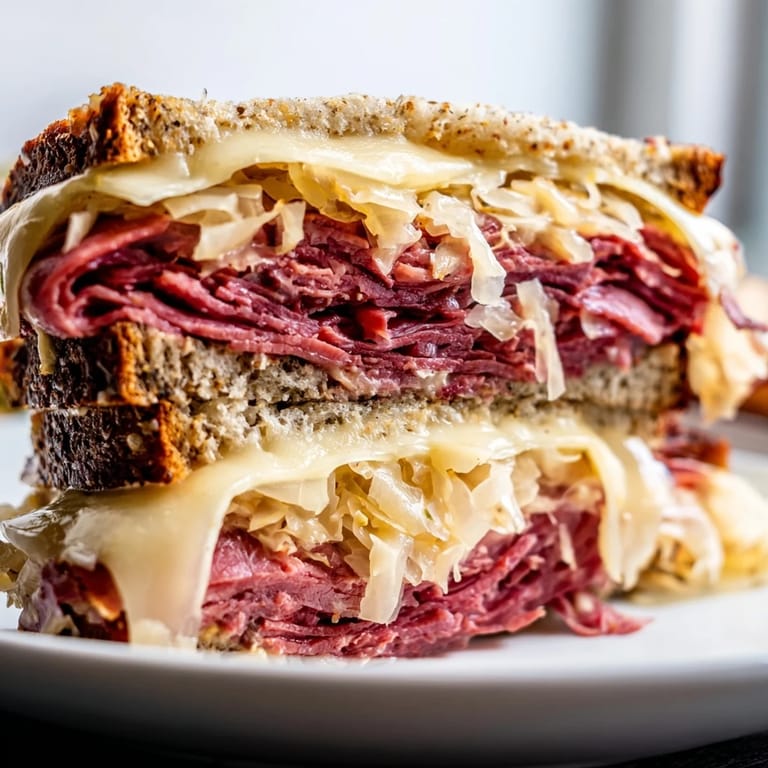
Save There's something about a Reuben that transforms a lunch into an experience, maybe because it requires you to sit down and actually pay attention to what you're eating. My friend now requests these sandwiches whenever they visit, which I take as the highest compliment.
Why This Sandwich Works
A Reuben is a master class in flavor balance: the savory, slightly salty corned beef plays against the sharp, funky tang of sauerkraut, while the Russian dressing brings creaminess and complexity that ties it all together. The Swiss cheese melts into everything without overwhelming, and the rye bread has enough personality to stand up to the bold fillings instead of disappearing. It's a sandwich that evolved in New York delis for a reason, and every element earned its place.
The Secret to Perfect Grilling
The magic happens at the intersection of temperature and patience. Too hot and you get burnt bread with cold cheese; too low and everything steams instead of crisps. Medium heat with gentle, consistent pressing lets the butter do its work, creating a crust that's golden and crispy while the interior stays warm and soft. I learned this the hard way after burning three sandwiches in a row.
Variations and Upgrades
Once you master the classic, you can play with it without losing the soul of the sandwich. Some people toast the sauerkraut in a dry pan first for extra crunch and depth, which I actually recommend if you have the time. You can swap Thousand Island dressing for Russian if you prefer it slightly sweeter, or even try pastrami instead of corned beef for a change of scenery. The framework stays the same, but there's room for your own touch.
- Toast the sauerkraut in a hot skillet for two minutes to drive off excess moisture and deepen the flavor.
- Substitute the Russian dressing with Thousand Island if you want something a touch sweeter and less spicy.
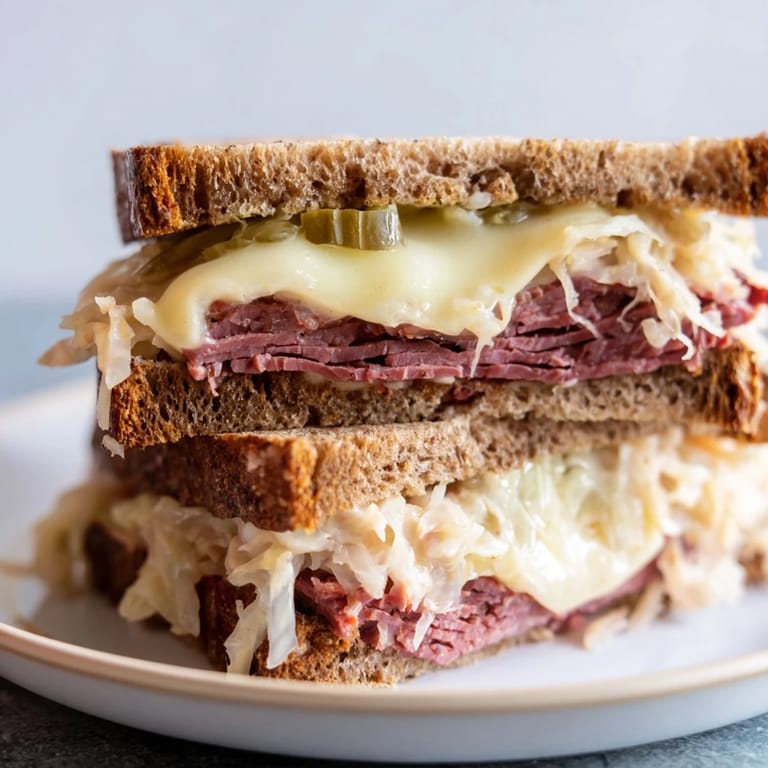
- Pair it with dill pickle spears and potato chips for the authentic deli experience that inspired this sandwich in the first place.
 Save
Save This sandwich is proof that sometimes the most satisfying meals come from honoring tradition while making it your own. Make it, share it, and let it become part of your kitchen story.
Recipe FAQs
- → What type of bread is best for this sandwich?
Rye bread is traditional, offering a slightly dense texture and a subtle tang that pairs well with the sandwich fillings.
- → Can I substitute the dressing used in this sandwich?
Yes, Thousand Island dressing is a common alternative that provides a similar creamy and tangy flavor profile.
- → What is the recommended cooking method for best texture?
Grilling the sandwich in a buttered skillet until the bread is golden and cheese melted ensures a crispy exterior and warm, gooey interior.
- → Is it better to drain or toast the sauerkraut before assembly?
Well-drained sauerkraut is essential to avoid sogginess; toasting it lightly beforehand can add a pleasant crunch and deepen the flavor.
- → How can I serve this sandwich for an authentic deli experience?
Serve with dill pickles and potato chips to complement the rich and tangy flavors, enhancing the classic deli style.