 Save
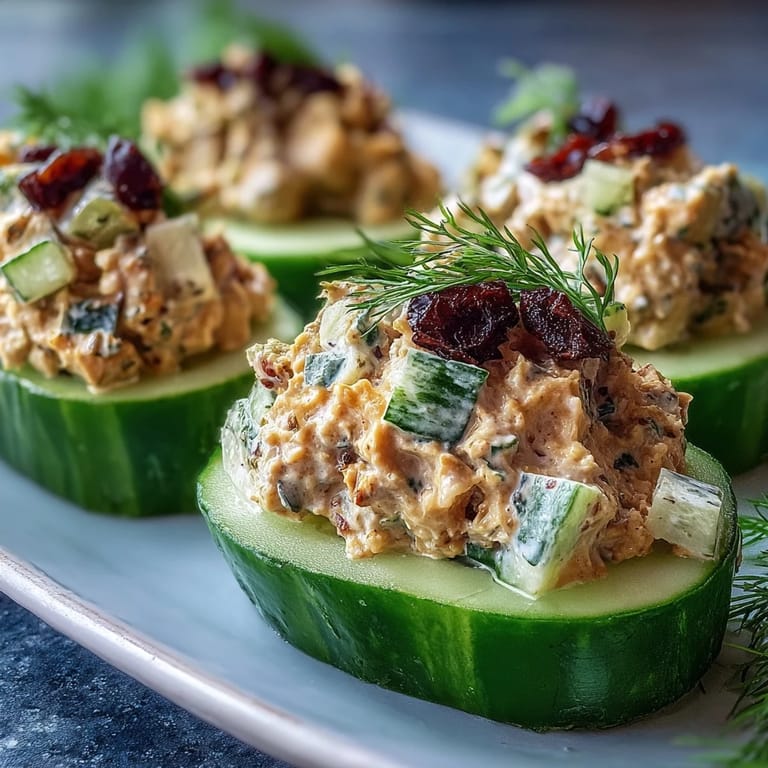
Save My friend texted me a photo of these cucumber boats at her farmers market haul, and I'll admit my first thought was skeptical—chickpeas pretending to be tuna felt like a stretch. But then she sent me a second photo of her actually eating one, and the pure joy on her face made me stop and think. Twenty minutes later, I was in my own kitchen with a fork and a can of chickpeas, and honestly, the zingy, briny result tasted nothing like a compromise. It tasted like summer in a bite.
I made these for a potluck last summer, and I remember watching someone reach for a second one, then a third, before asking what was in them. When I said chickpeas, they looked genuinely betrayed—in the best way. That moment taught me that people don't want fancy; they want something that tastes good and doesn't make them feel like they're eating a sad salad.
Ingredients
- Chickpeas: One can, drained and rinsed, becomes the meaty base that gives this salad real substance and texture.
- Vegan mayonnaise: This is your binding agent, so don't skip it or swap it for oil—the creaminess is what makes it feel indulgent.
- Dijon mustard: Just a tablespoon, but it brings the kind of tangy depth that makes people ask what your secret is.
- Lemon juice: Fresh is non-negotiable here; bottled just tastes flat and sad by comparison.
- Red onion: Finely chopped because raw onion bite is what wakes this whole thing up.
- Celery: The crunch factor that keeps it interesting with every bite.
- Dill pickles: This is the briny trick that makes it actually taste like the salad it's pretending to be.
- Fresh dill: If you have it, use it; dried works but fresh tastes like you actually care.
- Capers: Optional but worth hunting down—they add a salty, acidic punch that elevates everything.
- Garlic powder: Just a whisper of it, enough to add background flavor without screaming garlic.
- Sea salt and black pepper: Taste as you go because salt is personal.
- English cucumbers: The long ones are less watery and have smaller seeds, which means less scooping and more actual boat.
Tired of Takeout? 🥡
Get 10 meals you can make faster than delivery arrives. Seriously.
One email. No spam. Unsubscribe anytime.
Instructions
- Mash your chickpeas into submission (but not quite):
- Grab a fork or potato masher and break them down until you've got mostly mashed chickpeas with some chunks still visible for texture. You're going for salad consistency, not hummus.
- Build your flavor moment:
- Toss everything into the bowl with your chickpeas—mayo, mustard, lemon juice, the onion, celery, pickles, dill, capers, and those seasonings. Mix it all together until it looks cohesive and smells like something you actually want to eat.
- Taste and trust your palate:
- This is the step people skip and then regret. Take a spoon, taste it, and add more salt or lemon if it needs it. Your version is the right version.
- Prep your cucumber vessels:
- Wash your cucumbers under cold water and slice them lengthwise into halves. You're creating little boats here, so make your cuts clean and even.
- Scoop out the seed situation:
- Using a spoon, gently run it down the center of each cucumber half to remove the seeds, but leave enough flesh so the boat doesn't collapse. This takes maybe ten seconds per half and makes all the difference.
- Dry them off if they're wet:
- A quick pat with a paper towel prevents your beautiful filling from sliding right off.
- Fill with purpose:
- Spoon the chickpea salad into each boat, pressing it down gently so it nestles in and looks intentional. Don't be shy—these can hold more than you think.
- Serve now or chill for later:
- Fresh is best, but they'll keep in the fridge for up to two hours if you're planning ahead.
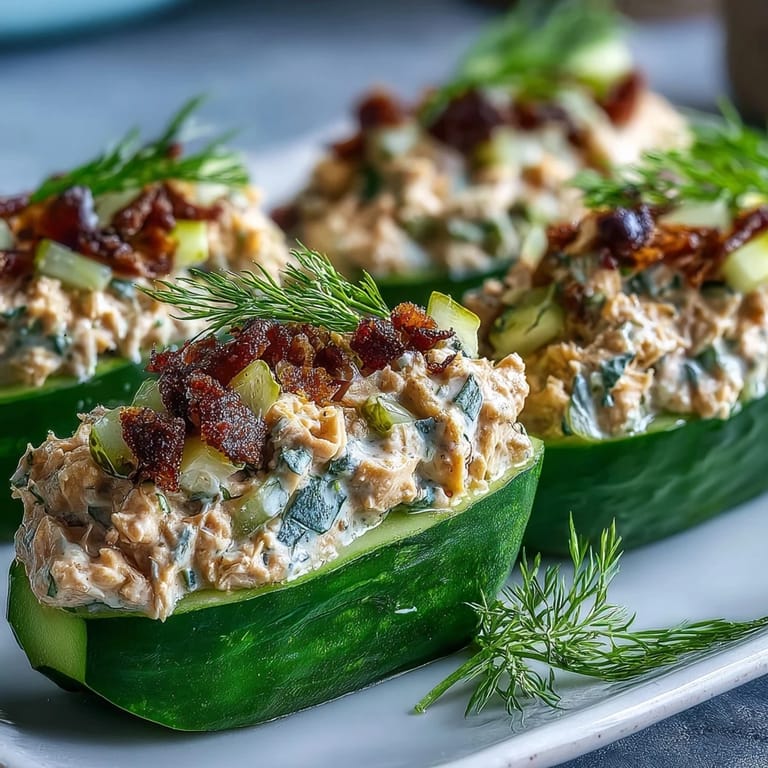 Save
Save My mom made these for her book club last month and said three people asked for the recipe before they even sat down to eat. She texted me later that night with a photo of the empty platter and just the words: "They're coming back." That's when you know you've made something special.
Why This Works as a Meal
On days when I don't have the energy to cook but still want to feel like I ate something real, these cucumber boats deliver. The chickpeas give you protein and fiber to keep you full, the vegetables add actual nutrition, and the whole thing feels fresh and light without being one of those salads that leaves you hungry and sad two hours later. It's the kind of food that works equally well as a 3 p.m. snack or part of a lunch spread.
Customization Without Guilt
Once I stopped thinking of this as a fixed recipe and started thinking of it as a template, everything changed. Want it spicier? Add a pinch of cayenne or some diced jalapeño. Want it sweeter? A touch of maple syrup balances the tang. The beauty here is that the chickpeas are sturdy enough to handle tweaks, and the cucumber boats don't care what flavor profile you're going for as long as it tastes good.
Storage and Make-Ahead Magic
The chickpea salad actually tastes better after sitting in the fridge for an hour because the flavors have time to get to know each other. I usually make it the morning of and let it chill, then assemble the boats right before eating or serving. If you're meal prepping, keep the salad and cucumber halves separate and combine them just before you want to eat—this prevents the cucumbers from getting soggy and sad.
- Make the chickpea salad up to three days ahead and store it in an airtight container.
- Prep your cucumber boats the morning of serving and keep them in a container lined with paper towels.
- Assemble just before eating for the crispest, most satisfying bite.
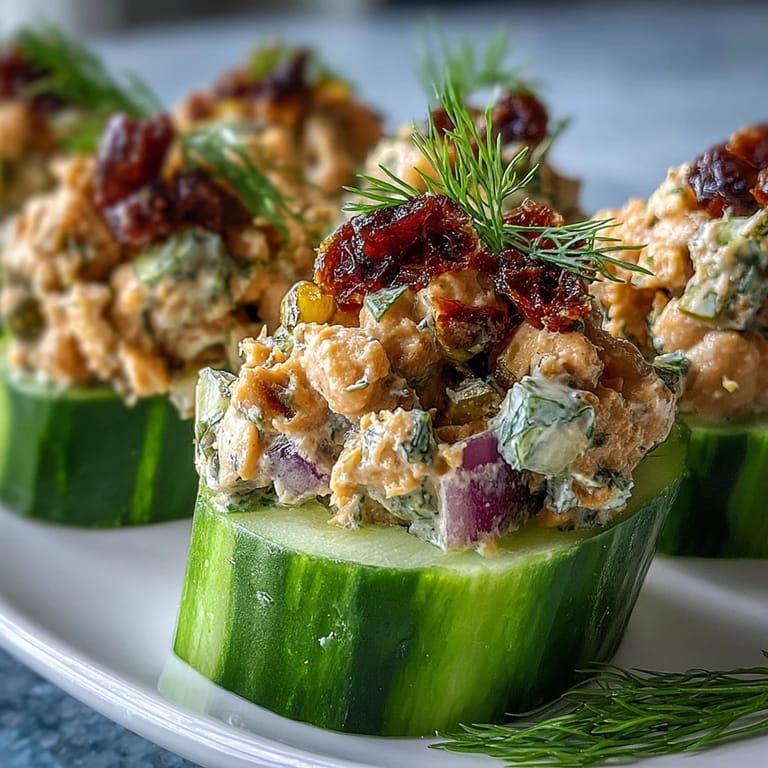 Save
Save These cucumber boats have become my go-to when I want to feel like I did something impressive without actually breaking a sweat. They're proof that sometimes the simplest combinations—just chickpeas, fresh vegetables, and a little attitude—are the ones people actually remember.
Recipe FAQs
- → Can I prepare the chickpea salad ahead of time?
Yes, the chickpea salad can be made up to two hours in advance and stored in the refrigerator, keeping flavors fresh and well melded.
- → What substitutes work for vegan mayonnaise?
Plain unsweetened non-dairy yogurt can be used for a lighter texture and tangy flavor without altering the dish's essence.
- → How can I add extra crunch to this dish?
Thinly sliced radishes or green onions sprinkled on top provide delightful texture contrasts and a burst of freshness.
- → Are there optional ingredients to modify flavor?
Capers add a briny note, while fresh dill enhances herbal aroma; both can be adjusted or omitted based on preference.
- → What type of cucumbers are best for stuffing?
Long English cucumbers are ideal as their firm flesh and minimal seeds create stable, crisp boats for filling.