 Save
Save One afternoon, my neighbor mentioned she'd gone vegan and I panicked a little, wondering what on earth I could make her for dinner that wouldn't feel like a sacrifice. Then I remembered a jar of pumpkin seeds languishing in my pantry and thought, why not try them in a pesto? The result was so unexpectedly rich and nutty that I've made it constantly ever since, even for people who eat everything. It's become my secret weapon for proving that plant-based cooking doesn't mean compromise.
I made this for my friend Maya on a warm spring evening when she was going through her first month of veganism, and I'll never forget how her eyes lit up when she tasted it. She kept asking what the secret ingredient was, convinced there was cream hiding somewhere, and when I told her it was just pumpkin seeds, she laughed in disbelief. That dinner turned into a conversation about how food can feel abundant even when you're removing things from your diet.
Ingredients
- Raw pumpkin seeds (pepitas): The heart of this pesto, they bring a subtle sweetness and that beautiful nutty flavor that makes people ask what the secret is.
- Fresh basil leaves: Use the good stuff if you can, because basil is doing the heavy lifting here alongside the pumpkin seeds to create that vibrant color and fresh finish.
- Garlic: Just two cloves keep things bright without overpowering, so resist the urge to add more unless you're really craving boldness.
- Extra-virgin olive oil: This is your emulsifier and richness, so choose one you actually like drinking because you'll taste it.
- Lemon juice: The acid cuts through the richness and keeps everything tasting alive and fresh, which is especially important when there's no cream to balance.
- Nutritional yeast: This is the umami bomb that makes the pesto feel savory and complex, giving it that savory depth you'd normally get from parmesan.
- Sea salt and black pepper: Start with less than you think you need because nutritional yeast adds its own salty note.
- Water: Your texture control, added slowly to get the pesto creamy without making it thin.
- Medium zucchini: Choose ones that are firm and not too enormous, because giant zucchini can be watery and collapse when you spiralize them.
- Cherry tomatoes: Halve them just before serving so they stay bright and juicy rather than oxidizing into dullness.
Tired of Takeout? 🥡
Get 10 meals you can make faster than delivery arrives. Seriously.
One email. No spam. Unsubscribe anytime.
Instructions
- Build your pesto base:
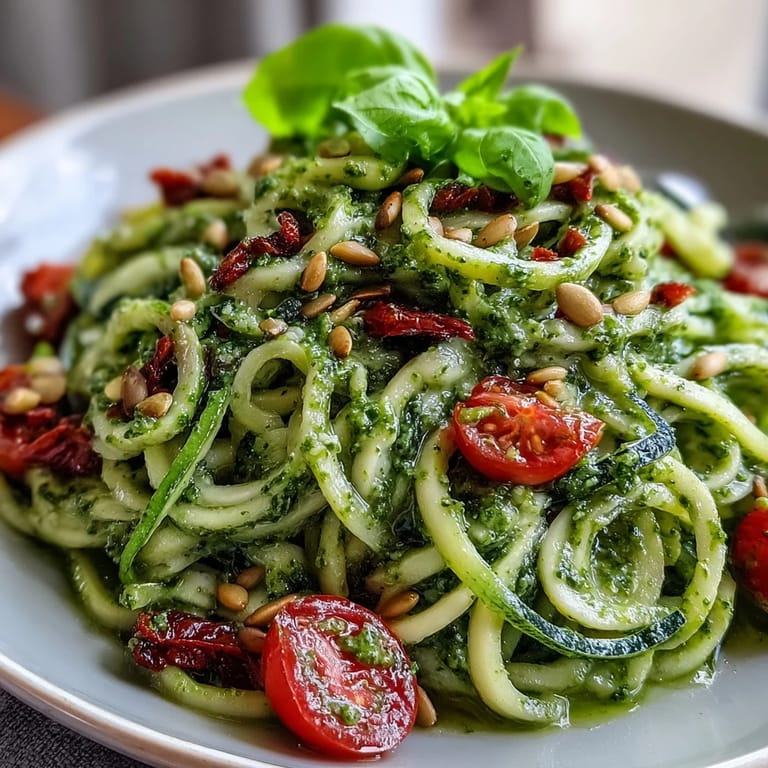
- Add the pumpkin seeds, basil, garlic, olive oil, lemon juice, nutritional yeast, salt, and pepper to your food processor and pulse rather than blend, so you keep some texture and the seeds don't turn into flour. You're looking for something that's thick and coarse with little flecks of seed visible, not a smooth spread.
- Adjust the consistency:
- Add water one tablespoon at a time while pulsing until you get to that point where it's spreadable but still has body. This is your chance to taste too and add more salt or lemon if it needs brightness.
- Prepare your zucchini:
- Run each zucchini through your spiralizer or use a julienne peeler to create long, delicate noodles that cook or warm almost instantly. If you're using raw noodles, pat them completely dry with paper towels or they'll release water onto your dish.
- Warm the noodles (optional):
- If you prefer warm noodles, heat olive oil in a large skillet over medium heat and add the zucchini strands, sautéing for just two or three minutes until they've softened slightly and warmed through without becoming mushy. You want them to still have a little bite.
- Combine and finish:
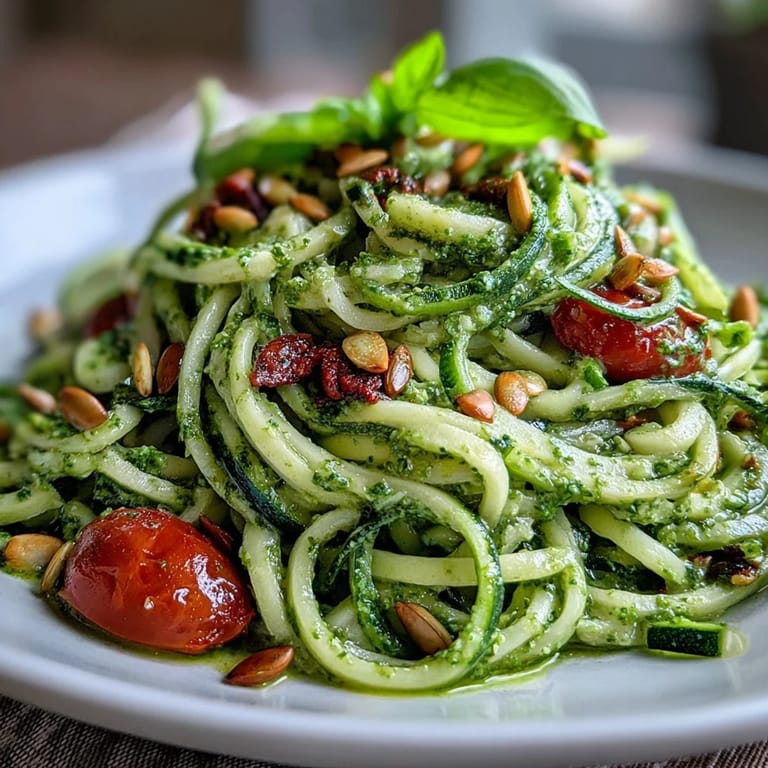
- Toss the zucchini noodles gently with your pumpkin seed pesto until everything is coated, then plate immediately while the noodles are still slightly warm. Top with halved cherry tomatoes and torn fresh basil leaves right before serving so they stay vibrant.
 Save
Save There's something magical about serving this dish to someone skeptical about vegan food, watching them taste it, and seeing that moment when they realize there's nothing missing. It became less about proving something and more about sharing a dish that's genuinely delicious, the way all the best meals should be.
Why Pumpkin Seeds Are Your New Secret Weapon
I used to think pumpkin seeds belonged exclusively in Halloween roasted batches or sprinkled across salads, but the first time I blended them into a pesto I understood why they're used in sauces across so many cuisines. They're less delicate than pine nuts so they hold up to processing without breaking down into powder, they have natural oils that help create creaminess, and they bring this subtle mineral note that makes a dish taste sophisticated and intentional. Once you realize this, you start seeing them as the base for dressings, soups, and condiments rather than just a snack.
Raw Versus Warm: How Temperature Changes Everything
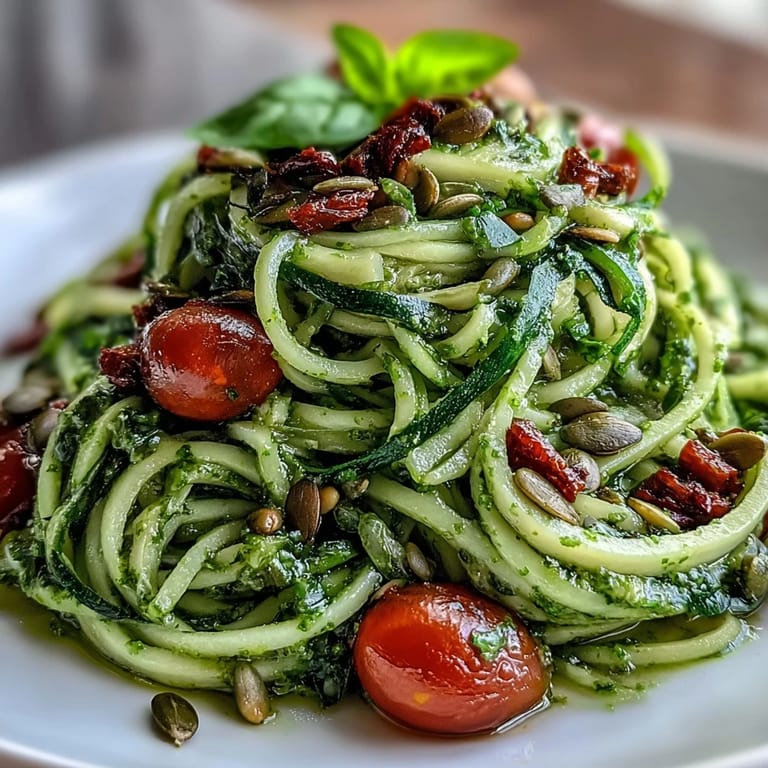
The beautiful thing about zucchini noodles is their versatility, and this is one of those dishes where both versions work beautifully but feel completely different. Raw noodles stay crisp and fresh, almost like eating a cool salad in noodle form, while briefly warmed noodles become silky and create a sauce that clings differently as they release their moisture. I've served this both ways depending on the weather and the mood, and I've learned that sometimes the choice comes down to whether you're trying to cool yourself down or warm yourself up from the inside out.
Making This Dish Your Own
The pesto base is forgiving enough to bend to what you have on hand and what you're craving, so don't feel locked into the exact measurements. I've made it with avocado blended in for extra creaminess on nights when I wanted something richer, swapped half the pumpkin seeds for walnuts when I needed to stretch them, and once even added a small handful of spinach when I was trying to eat more greens. The point is that this formula works because the lemon juice and nutritional yeast keep everything balanced regardless of small substitutions.
- If you want to add protein, a handful of cooked chickpeas stirred in at the end transforms this into a more substantial main course.
- A drizzle of good olive oil over the top right before serving adds a sheen and an extra layer of richness that feels restaurant quality.
- This pesto keeps for three days in the refrigerator, making it perfect for meal prep, though the noodles are best spiralized fresh.
 Save
Save Every time I make this I'm reminded that vegan cooking isn't about absence, it's about discovering new ingredients and techniques that create something delicious in their own right. This dish has become a favorite in my regular rotation not because it's vegan, but simply because it's good.
Recipe FAQs
- → How do I make pumpkin seed pesto creamy?
Pulse raw pumpkin seeds with olive oil, lemon juice, and water a tablespoon at a time until you reach a creamy, spreadable texture.
- → Can zucchini noodles be served warm?
Yes, lightly sauté zucchini noodles with olive oil for 2–3 minutes to warm them without losing their crisp texture.
- → What can I substitute for pumpkin seeds in the pesto?
Sunflower seeds or walnuts make great alternatives, offering different but complementary flavors.
- → How do I store leftovers to keep them fresh?
Store zucchini noodles and pesto separately in airtight containers refrigerated for up to 2 days for best freshness.
- → Can I add more protein to this dish?
Yes, toss in cooked chickpeas or white beans to boost protein content and add variety in texture.