 Save
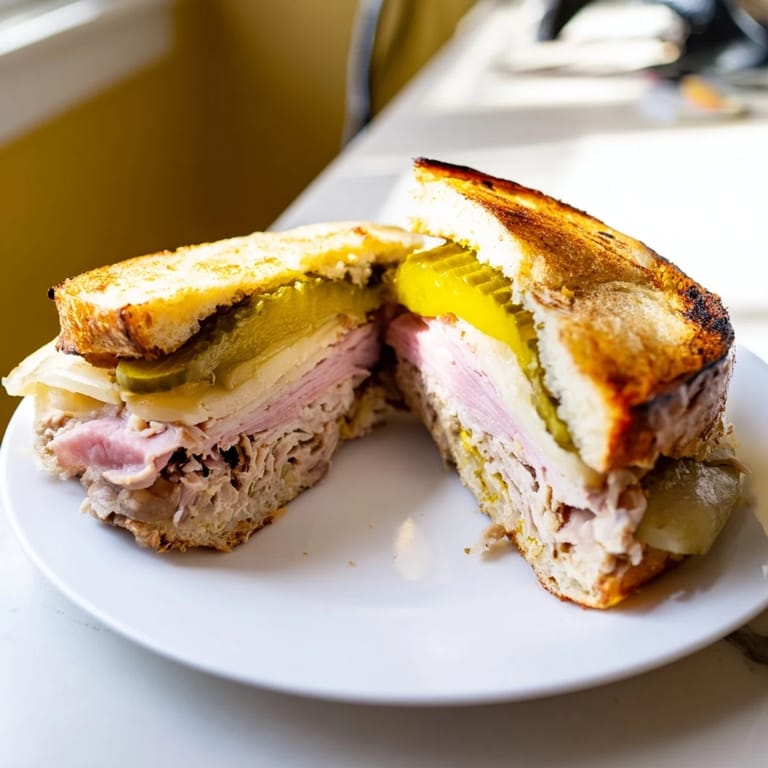
Save My first Cuban sandwich wasn't supposed to happen in Miami—it happened in my tiny apartment kitchen on a random Tuesday when I was trying to recreate something I'd tasted at a hole-in-the-wall cafeteria. I had no panini press, no real Cuban bread, just determination and whatever I could find at the grocery store. The moment that first bite hit my mouth, warm cheese oozing out of toasted bread and the pickle tang cutting through all that rich pork and ham, I understood why this sandwich had survived generations. It's simple, but it hits different.
I made these for my neighbor once when she was going through a rough patch, and she showed up at my door the next week with her own batch because she wanted to pay it forward. That's when I realized this sandwich isn't just food—it's the kind of thing that gets passed around, shared, remembered. Now whenever I toast that bread, I think of her.
Ingredients
- Roast pork, thinly sliced (8 oz): This is the backbone of the sandwich, and the quality makes all the difference—look for meat that's still slightly warm or let it come to room temperature so it melts into everything around it.
- Deli ham, thinly sliced (8 oz): It adds a subtle smokiness that plays beautifully against the roast pork without overpowering it.
- Swiss cheese, thinly sliced (8 oz): The small holes in Swiss let it melt evenly and give you those perfect pockets of melted cheese in every bite.
- Cuban bread, 1 loaf cut into 4 portions: If you can't find real Cuban bread, look for something soft but sturdy enough to press without falling apart—soft French or Italian works in a pinch.
- Yellow mustard (1/4 cup): Don't skip this or substitute it; the sharpness is essential, and it creates a flavor bridge between all the other elements.
- Dill pickle slices (16 total): These are your textural wake-up call, cutting through the richness with brightness and crunch.
- Unsalted butter, softened (2 tbsp): This is what gets you that golden, crispy exterior that makes the whole experience feel indulgent.
Tired of Takeout? 🥡
Get 10 meals you can make faster than delivery arrives. Seriously.
One email. No spam. Unsubscribe anytime.
Instructions
- Toast and coat the bread:
- Slice your Cuban bread horizontally with a serrated knife in one smooth motion—don't saw back and forth or you'll tear the crumb. Spread mustard generously on both cut sides, all the way to the edges so every bite has that sharp hit.
- Build your layers:
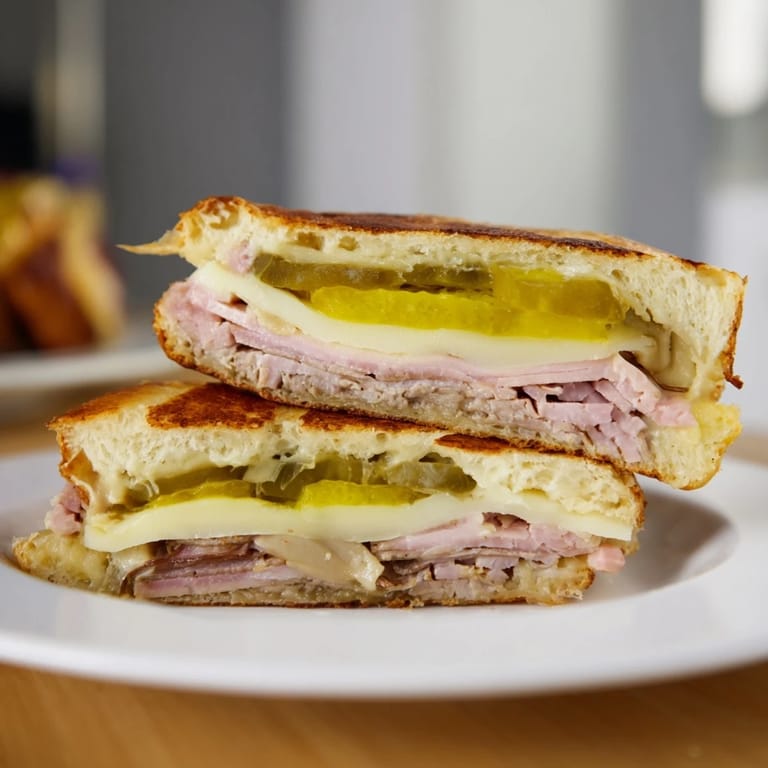
- Start with roast pork on the bottom, then ham, then cheese, then pickles—this order matters because the warmth will melt the cheese onto everything below it. Press gently as you go so nothing slides around.
- Close and butter:
- Set the top half down and press gently but firmly to compress everything slightly, then use softened butter to coat the outside of the bread like you're buttering toast. This is what gives you that crispy, golden crust.
- Heat your press or skillet:
- If you're using a panini press, preheat it to medium heat. If you're using a skillet, get it hot enough that a drop of water sizzles immediately but not so hot it smokes.
- Press and grill:
- Place the sandwich in the press or skillet and apply firm, steady pressure—you want the bread to toast golden and the cheese to fully melt. In a press, this takes about 5–7 minutes; in a skillet, flip halfway through, about 4–5 minutes per side, using a heavy pan to press from above.
- Finish and serve:
- When the bread is deeply golden and you can hear the cheese crackling slightly, remove it from heat. Let it cool for just 30 seconds so you don't burn your mouth, then slice diagonally and serve immediately while everything is still steaming.
 Save
Save The first time I got the cheese actually melted through the whole sandwich—not just on top, but woven into every layer—I sat there for a second just staring at it. That's the moment I stopped trying to make it perfect and started making it with intention, understanding what each ingredient was supposed to do. It's been my favorite sandwich ever since.
Why the Details Matter
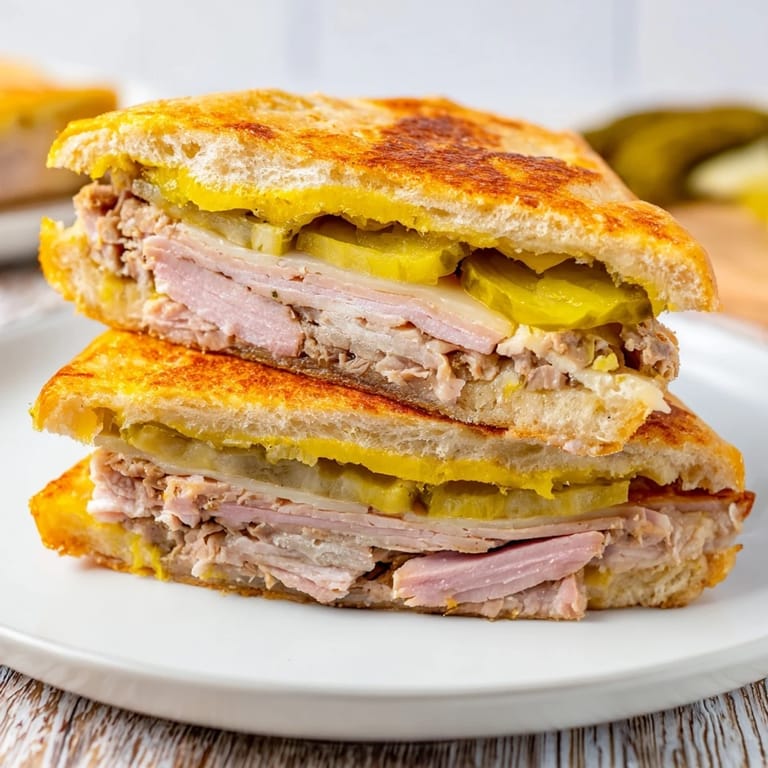
This sandwich is deceptive in its simplicity. The magic isn't in fancy techniques or rare ingredients—it's in respecting what you have and executing it cleanly. The butter on the outside, the mustard on the inside, the pressure while grilling—these aren't arbitrary steps, they're how six ordinary ingredients become something unforgettable. When I stopped overthinking it and started paying attention to texture and temperature, everything changed.
Bread and Butter Moments
Cuban bread is soft on the inside and has just enough structure to hold up under pressure, which is why it's so hard to replicate. If you're substituting, look for something labeled day-old if possible—slightly stale bread actually holds up better to pressing than freshly baked. The butter creates a barrier that prevents the bread from getting soggy while the insides get steamy and warm.
Making It Your Own
This is where intuition comes in, and there's room for your own touch. Some people add mayonnaise to the mustard for richness, others layer in a thin slice of tomato or onion right before grilling. The pickles are flexible too—use whatever kind you have as long as it's got vinegar and crunch. The structure stays the same, but you can absolutely play with the flavor profile and make it feel like your own.
- A thin spread of mayo mixed with the mustard adds creaminess without overwhelming the other flavors.
- If you find yourself with leftovers, they're best eaten cold the next day straight from the fridge, when the flavors have had time to marry.
- Serve alongside plantain chips, a simple green salad, or just eat it standing at the counter like most people do.
 Save
Save This sandwich reminds me that the best food doesn't need to be complicated—it just needs to be made with care. There's something honest about it.
Recipe FAQs
- → What type of bread works best for this sandwich?
Cuban bread is ideal for its crisp crust and soft interior, but French or Italian bread make good substitutes.
- → How do you achieve the crispy, melty texture?
Spread softened butter on the outside and grill the sandwich with a press or skillet, applying weight to melt cheese and crisp the bread.
- → Can I add other condiments or ingredients?
A thin layer of mayonnaise adds richness; plantain chips or a fresh salad complement the sandwich nicely.
- → How long does preparation and cooking take?
Preparation takes about 15 minutes and cooking roughly 10 minutes, totaling around 25 minutes.
- → Are there common allergens in this dish?
Contains wheat from bread, dairy from cheese and butter, and pork from the meats. Always check ingredient labels for potential traces.