 Save
Save One December evening, my kitchen was so cold I could see my breath, so I decided to make something that would warm me from the inside out. I'd picked up a knob of ginger at the market that morning, and somehow that simple ingredient sparked the idea for this soup. What started as a quick weeknight dinner became something I found myself craving every winter since—there's something almost meditative about watching ginger-infused broth transform into pure comfort in a bowl.
I made this for my neighbor during a particularly rough flu season, ladling it into her favorite bowl and leaving it on her porch with strict instructions to eat it while it was still steaming. She texted me later saying she'd made it twice more that week, and suddenly this became the soup I'm known for—the one people ask about when the weather turns.
Ingredients
- Water or low-sodium vegetable broth (6 cups): The foundation of everything; use broth if you want more flavor, water if you prefer the ginger and miso to be the true stars.
- Fresh ginger (2-inch piece, thinly sliced): This is where the magic happens—slicing it thin releases more of that warming, slightly spicy essence into every spoonful.
- Garlic cloves (2, thinly sliced): Adds a subtle sweetness that balances the sharpness of the ginger beautifully.
- White or yellow miso paste (2 tablespoons): The secret ingredient that transforms simple broth into something with real depth; red miso works too if that's what you have, though it'll be earthier.
- Napa cabbage (1 cup, thinly sliced): Stays delicate even after cooking and picks up the broth's flavor like nothing else.
- Carrot (1 medium, julienned): Adds natural sweetness and a bit of textural contrast that keeps the soup interesting.
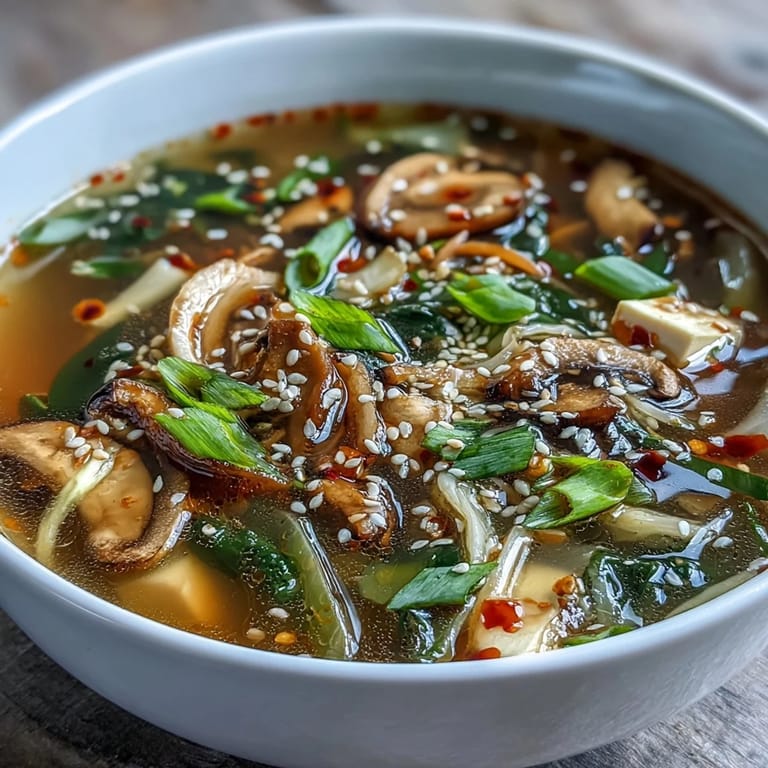
- Shiitake mushrooms (1 cup, stemmed and sliced): These aren't just flavor—they contribute their own umami that makes the miso work even harder.
- Scallions (2, sliced): Fresh and bright at the end, they're what makes you feel like you've made something restaurant-quality.
- Toasted sesame seeds (1 tablespoon): A small handful makes an enormous difference in how satisfying this feels.
- Fresh cilantro or parsley (1 tablespoon, optional): I use cilantro most often, but parsley works when you want something more delicate.
- Chili oil or chili flakes (1 teaspoon, optional): Just enough heat to make you notice something's different without overpowering the ginger.
- Silken tofu (200 g, cubed, optional): Adds protein and a silky texture that feels luxurious in each bite.
- Soba or rice noodles (100 g, cooked, optional): Turns this into a more complete meal if you're planning to make it your dinner.
Tired of Takeout? 🥡
Get 10 meals you can make faster than delivery arrives. Seriously.
One email. No spam. Unsubscribe anytime.
Instructions
- Start with gentle heat:
- Bring your water or broth to a simmer in a large pot—not a rolling boil, just that quiet bubbling where steam rises steadily. This is the tempo for the whole soup.
- Build the aromatic base:
- Add the ginger and garlic slices and let them steep for 10 minutes, watching as the broth slowly turns golden and begins to smell like a proper winter kitchen. You'll know it's ready when the aroma is impossible to ignore.
- Welcome the vegetables:
- Add the cabbage, carrot, and mushrooms and simmer for 5 to 7 minutes until they're tender but still hold their shape slightly. This is where you get to taste as you go and decide if the vegetables need more time in your particular stove's rhythm.
- Protect the miso:
- Remove the pot from heat, scoop the miso paste into a small bowl, and ladle in some hot broth—whisk until it's completely smooth with no lumps. Pour this mixture back into the pot gently and stir, being mindful never to boil it again so the beneficial probiotics stay intact.
- Final warm-through:
- Add your tofu and noodles if using them, let everything warm together for about 2 minutes, and taste for balance. This is your moment to adjust—a pinch more salt, a touch of soy sauce, whatever feels right.
- Serve with intention:
- Ladle into bowls and crown each one with scallions, sesame seeds, herbs, and a drizzle of chili oil. The garnishes aren't decoration—they're what make this soup feel special.
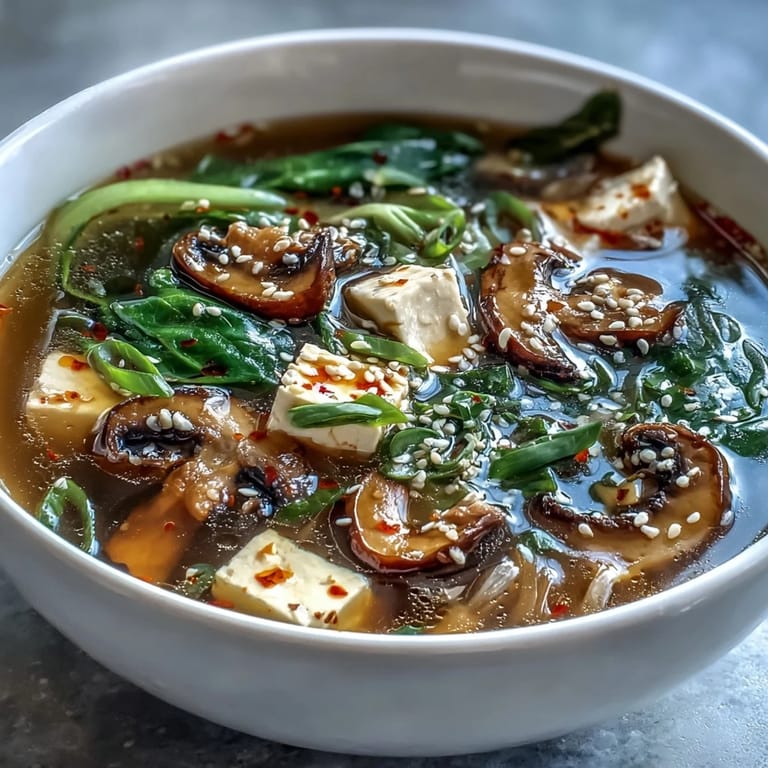 Save
Save There's a moment that happens every time I make this—usually around the third or fourth spoonful—where the warmth finally reaches somewhere deep in your chest, and you realize this isn't just soup, it's a small act of self-care disguised as dinner. That feeling is why I keep making it, why I keep sharing it.
The Ginger Question
When I first started making this, I used powdered ginger thinking it would be easier, but fresh ginger is absolutely non-negotiable here. The difference isn't subtle—fresh ginger gives you this bright, living quality that powder can never achieve, and it's what people taste first when they try this soup. If you're hesitant about cooking with fresh ginger, this recipe is actually the gentlest introduction; slicing it thin and simmering it for 10 minutes mellows it into something approachable and almost sweet.
Miso Paste Variations
I've made this soup with white miso, yellow miso, and once with red miso when that's all I had on hand, and each one tells a slightly different story. White miso is the most delicate and lets the ginger shine; yellow is the middle ground with a bit more funk and depth; red is earthier and more intense, best if you're using extra vegetables or noodles to anchor it. You really can't go wrong, but understanding these differences means you can adjust the ginger amount slightly depending on which miso you choose—more ginger with red, less with white.
Making It Your Own
This soup has an almost infinite capacity for substitution and improvisation, which is partly why it's become my favorite thing to make when my fridge is half-empty. The base of ginger, miso, and broth is what matters; everything else is just what you happen to have or what season you're cooking in. The beauty is that it works with spring greens just as well as winter vegetables, with canned mushrooms in a pinch, with whatever noodle shape you're drawn to.
- Try adding a tablespoon of soy sauce or tamari for deeper umami complexity.
- Swap shiitake for oyster, button, or enoki mushrooms depending on your preference or what's available.
- Include bok choy, spinach, daikon, or any tender green you want to celebrate this week.
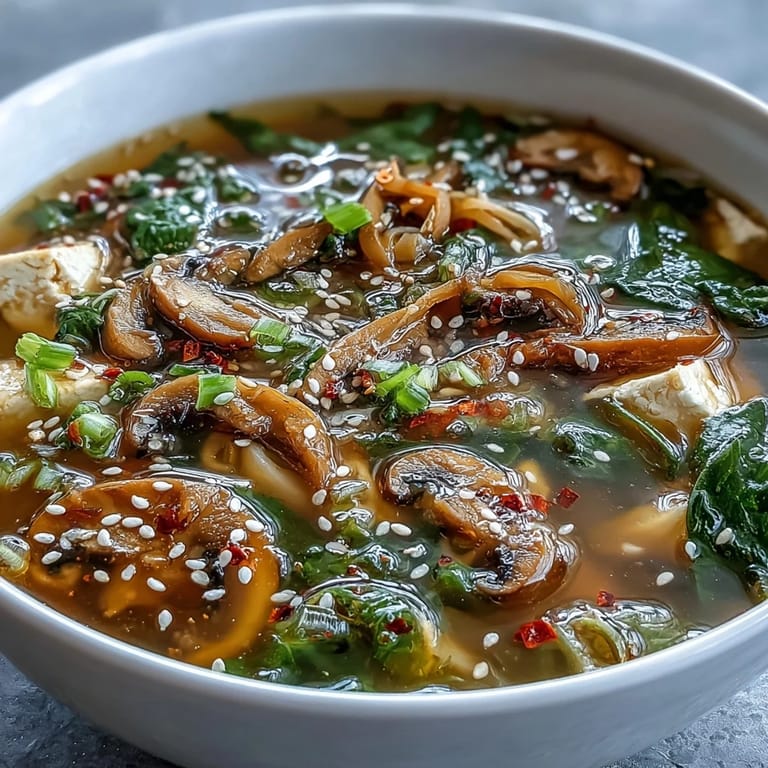 Save
Save This soup exists in that rare category of food that nourishes your body and settles your mind at the same time, which is really all we're after on the hardest days. Make it, share it, and watch how something so simple becomes the thing people remember when they think of you.
Recipe FAQs
- → Why add miso off the heat?
Adding miso paste after removing the pot from heat preserves the beneficial probiotics and enzymes, which can be destroyed by high temperatures. It also prevents the miso from becoming grainy or separating.
- → Can I use red miso instead of white?
Yes, though red miso has a stronger, more intense flavor. Use less to begin with and adjust to taste. White miso provides a milder, sweeter profile that complements the delicate vegetables.
- → How long does this soup keep?
Store in an airtight container in the refrigerator for up to 3 days. The flavors will continue to develop. Reheat gently without boiling to maintain the miso's beneficial properties.
- → What can I use instead of shiitake mushrooms?
Enoki mushrooms provide a delicate texture, while button or cremini mushrooms offer a meatier bite. Foraging enthusiasts might try oyster mushrooms for a subtle seafood-like flavor.
- → Is this soup gluten-free?
The base soup is naturally gluten-free, but some miso brands contain barley. Check labels carefully and opt for certified gluten-free miso. If adding noodles, choose rice noodles or verify soba is 100% buckwheat.
- → Can I make this in advance?
Prepare the vegetable broth base and ginger-garlic infusion up to a day ahead. Add the miso and fresh garnishes just before serving for the best flavor and texture.